Rabu, 20 Januari 2016

Posted by Unknown | File under :

The Dacia Sandero Stepway is designed as a rugged version of the regular Sandero hatchback. Although it has a raised ride height, it’s a great-value alternative to crossovers like the Nissan Juke and Fiat Panda Trekking.

Dacia is all about low costs, and the Stepway is extremely well priced, undercutting most of its main rivals by quite a margin. It’s also very spacious, while the diesel engine is cheap to run and has a decent amount of mid-range pulling power.

If you’ve driven a Renault in the last decade, the Sandero Stepway is likely to feel familiar from behind the wheel, as the car uses older Renault components and switchgear. As a result, it isn’t the most premium package, but this is one of the main areas where the brand has been able to save on costs, which it’s passed on to its customers.

Dacia launched in the UK as a no-frills, budget brand offering cut-price cars that are cheap and cheerful. The regular Sandero hatchback grabbed headlines as Britain’s cheapest car, but this wasn’t just a one-hit wonder for the company; Dacia has gone from strength to strength, adding other models to its line-up.

The Sandero Stepway is based on the Sandero hatchback, but it has a raised ride height, roof rails and black plastic cladding around the wheelarches and bumpers, which give it the look of an SUV. It sits below the Logan MCV estate and Duster SUV in the Dacia range.

As the Sandero Stepway is front-wheel drive, it isn’t really a serious off-roader – don’t expect it to rival a Land Rover over rugged terrain – but those few features make it a little more rugged and capable of tackling bumpy surfaces than your average hatchback.


Value is what Dacia is all about, and the entry-level Sandero Stepway Ambiance is extremely cheap to buy. Yet it isn’t badly kitted out considering the bargain price tag. There’s only one other trim level, the top-spec Laureate, and while it’s a bit more costly, it brings more equipment so it’s still incredibly good value.

Just as there are two spec choices, there are two engine choices: a 0.9-litre three-cylinder turbocharged petrol, badged TCe, and a 1.5-litre dCi diesel. Both deliver 89bhp and are hooked up to a five-speed manual gearbox – this is the only transmission option. The engines are sourced from parent company Renault, and have been proven in the Clio supermini and Captur crossover.

It’s difficult to compare the Stepway to rivals because of its low price and because it sits halfway between a hatchback and a small SUV. However, it arguably occupies a similar market position to affordable, spacious cars such as the Suzuki SX4 S-Cross, the Hyundai ix20, Kia Venga and Honda Jazz, as well small crossovers such as the Nissan Juke and Peugeot 2008. Although it isn’t full 4x4, it could also be considered against the likes of the Suzuki Swift 4x4 and Fiat Panda Cross.  

The Dacia Sandero Stepway shares its underpinnings with the standard Sandero hatchback. This car, in turn, is based on the previous-generation Renault Clio and, as you would expect, it feels a bit dated on the move.

However, it's far from outclassed as the jacked-up suspension soaks up bumps very well, so the ride is comfortable. There’s a reasonable amount of grip, but the body rolls through corners. Plus, the steering is heavy at low speeds and provides the driver with little in the way of feedback. It’s hard to complain at this price, but you don’t have to look far to find another small, cheap car that’s more fun to drive.


What's more, despite its tough looks, the Sandero Stepway doesn’t offer much in the way of off-road ability. The all-season tyres give a little extra grip in tricky conditions and the raised suspension delivers additional ground clearance, but that’s it. Power is still fed to the front wheels – there isn’t a four-wheel-drive system – and the car doesn’t come with any off-road driving aids.

On the plus side, the raised ride height provides an improved view of the road, and Dacia has positioned the pedals well. The five-speed manual gearbox – the only transmission option in the Sandero Stepway – is easy to use, too.

There are two engines available – one petrol, one diesel – and both have 89bhp. The petrol is a 0.9-litre turbocharged three-cylinder, which is well suited to low-speed driving. It isn’t great outside of town, though, as it needs to be revved hard to get anywhere and struggles at A-road and motorway speeds.

The 1.5-litre dCi diesel is much better for high-speed cruising, and although this version of the Sandero Stepway is no performance car (it takes 12.1 seconds to cover 0-62mph, compared to 11.1 seconds in the petrol model), it is more flexible than the TCe. It also has a reasonable amount of mid-range pull when you bear in mind that it isn’t a big, powerful engine. 


The standard Dacia Sandero supermini is a relatively rugged looking, unfussy car – and that translates well to the SUV-inspired Stepway. In fact, the transformation has been a success.

Dacia has bulked up the Sandero Stepway with plastic wheelarch extensions and sills, as well as chrome roof bars, while the ride height has been increased by 100mm over the standard Sandero. All of these changes help it stand out from the basic five-door compact hatchback, and overall, it has a more upmarket feel due to the sprinkling of SUV style.

Unlike the regular Sandero, the Stepway is not available in entry-level Access trim – the basic hatch has unpainted bumpers, steel wheels and less equipment, but an even lower starting price. Instead, buyers of the Sandero Stepway can only choose from Ambiance and Laureate specifications, and both come with body-coloured door mirrors and bumpers, as well as stylish plastic wheel covers that can easily be mistaken for a set of alloys.

Despite the exterior differences, the Stepway is pretty much the same as the Sandero hatchback inside. It has the same logical dashboard layout, lots of hard plastics and plenty of switches that are familiar from Renault models. It’s basic, but everything feels robust and the driving position is also very comfortable.


The Sandero Stepway should prove reliable, even though it only arrived on the UK market in 2012. It finished in 54th place in the Auto Express Driver Power 2015 satisfaction survey, which is just outside the top quarter of the 200 cars in the chart.

The 900cc petrol and 1.5-litre diesel engines are shared with models in the latest Renault range, as is the five-speed manual box, and the rest of the tech is lifted from the previous-generation Clio supermini. These components have been around for a while, so any problems should hopefully have been ironed out by now, plus the Dacia’s simplicity means there’s less to go wrong in the first place.

Despite its budget roots, the Sandero Stepway comes with a respectable haul of safety kit, too: all versions get four airbags, ABS, stability control and Isofix child seat mountings.

However, Euro NCAP awarded the standard Sandero a four-star crash test score, which isn't the best when the maximum five-star score is the general standard for most modern superminis. The Sandero Stepway hasn't been put through the test separately, but you can expect a similar level of protection in the event of a crash.

Jumat, 15 Januari 2016

Posted by Unknown | File under :

The Ka feels dated from behind the wheel and can’t match more modern city car rivals such as the Skoda Citigo, SEAT Mii, Volkswagen up! and Hyundai i10 for refinement, low running costs or sharp handling.

To be fair, Ford has given the Ka’s suspension a thorough overhaul, meaning it features sharper handling and a more controlled ride than the Fiat 500 with which it was co-developed. It’s also a fraction more refined.

But the car also has to give best to rivals for practicality. Not only is it hobbled by a smaller interior and boot, the Ford is only available in three-door guise.

The latest Ka may have lost the grown-up driving dynamics and fun-filled character of the original model, but it still looks smart. And the comprehensive line-up means there’s a version for every taste and budget, too.

The original Ford Ka was one of the pioneers of the fashionable city car class when it made its debut in 1996. Boldly styled, great to drive and cheap to run, it proved a massive sales hit in showrooms – even though it started life with a breathless 1.3-litre OHV engine.

An all-new three-door-only model was launched in 2008, but under its fashionable skin the latest Ka shares many of its underpinnings with the Fiat 500 and previous-generation Fiat Panda. It’s even built at the same Tychy production facility in Poland.

There used to be a diesel option, but now the only engine available is a 68bhp 1.2-litre four-cylinder petrol, developed by the Italian brand. This is hooked up to a five-speed manual gearbox; there’s no automatic option, either.

The eye-catching StreetKa convertible was not carried forward from the previous generation, much to the disappointment of fans of pop star Kylie Minogue, who starred in a TV commercial promoting the car.


Seven years on from its launch, buyers can choose from Studio, Studio Connect, Edge, Zetec, Titanium, Metal and Grand Prix III trim levels.

All versions get stability control, stop/start and body colour bumpers, while the best-selling Zetec adds big car kit such as air-conditioning, electric windows, a heated windscreen and a leather-trimmed steering wheel. A Bluetooth phone connection, USB port and multifunction steering wheel have to be specified as no-cost options on all models except the fairly basic Studio Connect.

As with many of its rivals, the Ka is also available with a variety of personalisation options. For instance, there are a number of bold bodywork decals, a range of larger alloy wheels and even a lowering kit for the suspension.

An all-new five-door model was revealed at the end of 2013 and slated to arrive on UK soil in late 2014, but a European debut for the car – designed and developed in South America – has been postponed for now.

Ford seemed to overlook the incredibly positive impact of the sweet-handling original Ka when engineering the current generation. By opting to share mechanical bits and platform architecture with the Fiat 500 range for the Mk2 version, its options were limited from the outset.

To be fair, Ford’s technical team gave the Fiat chassis a thorough overhaul, with a new anti-roll bar allowing softer damping, but the Ka still falls a little short of class standards.


Happily, the tweaks to the suspension and steering have at least helped make the Ka sharper to drive than its Italian cousin. The steering is precise, body movement is well checked and there’s decent grip. While many drivers will appreciate its qualities, it’s likely those hoping for a bit more zest will feel the Ka is nowhere near as much fun as its bigger brother the Ford Fiesta, or indeed as its trend-setting nineties predecessor.

So it may not be a especially thrilling to drive, but in its favour the Ford feels remarkably stable and relaxed, and is capable of tackling long journeys without breaking a sweat. Only the occasionally fidgety ride at lower speed on bumpy surfaces gives any real cause for concern, and on longer journeys the wind and tyre noise may become intrusive – more modern rivals offer better refinement these days.

The Ford Ka is available with only one engine: an elderly Fiat-sourced 1.2-litre petrol, rebadged as a Ford Duratec, which makes 68bhp. It can sound strained at motorway speeds, which can become tiring, but it’s coupled with a five-speed manual gearbox that’s slick and easy to live with.

Otherwise, the engine is a smooth and reasonably spirited performer and feels happy to be worked hard. Even so, Ford claims a leisurely time of 13.4 seconds for the 0-62mph sprint, meaning the Ka will struggle to keep up with the standard-setting VW Group city car trio – the Skoda Citigo, SEAT Mii and Volkswagen up! – all of which use a smaller 1.0-litre engine. The Ford claims a 99mph top speed.


The domed roofline gives the Ford Ka a hint of its Fiat 500 sister car, but that’s about as far as the family resemblance goes.

In the main, the exterior is dominated by Ford’s latest styling cues, which give the car a sharp, modern look like a shrunken Ford Fiesta. It’s a different design approach to that of the intensely retro 500, and a sharp contrast to the original Ka with its distinctive curves, but it works well enough.

Studio and Edge versions of the latest Ka don’t get alloy wheels as standard, but Ford fits the latter with manual air-conditioning, electric front windows and remote central locking.

Whatever way you look at it, though, the Ford Ka is still expensive for a city car. Zetec models and above get front foglamps, heated wing mirrors and 50:50 split rear seats for that extra bit of practicality.

The interior is simple and stylish, with a higher-quality feel than you might expect to find in a city car. Unfortunately, newer rivals such as the brilliant Volkswagen up!, Skoda Citigo and SEAT Mii won’t be losing any sleep, and it's a bit of a shame that the radio controls and some of the cheaper materials from the Fiat 500 have made their way into the Ka’s cabin.


The latest Ford Ka didn't feature in the Auto Express Driver Power 2015 satisfaction survey, but the closely related Fiat 500 finished in 87th position. That was an impressive 27-place improvement on its ranking in the 2014 poll.

Ka owners haven’t reported any major reliability problems, and as it’s a relatively simple machine, any glitches should be fairly straightforward to rectify.

You’ll never be far from a Ford garage, either, although that may not necessarily be a good thing – the network ranked only 26th out of 31 in the Driver Power 2015 dealer survey.

The Ford Ka only comes with two airbags as standard, and so it’s no surprise it achieved a disappointing four-star score in the Euro NCAP crash tests. As the test was carried out in 2008 when the Ka was fresh in showrooms, it might conceivably do worse under the independent body’s current crash test regime, which has become more stringent over the years.

At least stability control and tyre pressure monitoring are standard across the Ka range, while curtain airbags can be added for £250. However, there’s no option to specify more advanced safety equipment such as autonomous emergency braking.

This is quite a contrast to the latest city cars – the Hyundai i10 earned five stars under the more rigorous Euro NCAP test regime, and side airbags are included on every model, while the same goes for the VW Group’s trio of city cars.

Kamis, 14 Januari 2016

Posted by Unknown | File under :

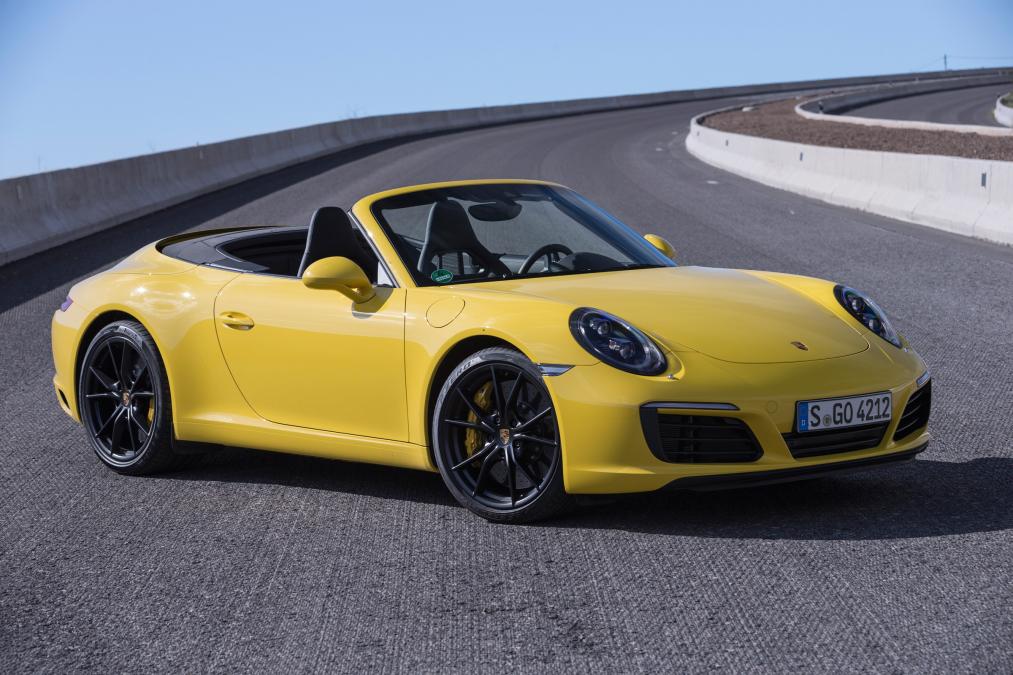
Like the new Carrera coupe, this 991.2-generation Porsche 911 Cabriolet is faster and more efficient than ever. It’s more usable, too, thanks to that new turbocharged engine, an improved chassis and some extra tech inside – but it’s not without its flaws.

Driving a convertible sports car should be an event. It’s about the theatre of stepping behind the wheel, lowering the roof to savour the atmosphere and firing up the engine to experience the noise. But what if that engine is now turbocharged?

That’s exactly what’s happened with the new 911. Like the coupe we tested, this facelifted 991 Cabriolet now uses a 3.0-litre flat-six turbocharged engine, rather than the larger naturally aspirated unit in the old car. But does that mean the days are numbered for the 911’s traditional bassy exhaust rasp? We jumped behind the wheel of the new entry-level £87,641 Carrera model with Porsche’s seven-speed PDK dual-clutch gearbox to find out.

The answer is mixed, as even with the optional £1,773 central-exit Sports exhaust, with the roof down the 911 doesn’t quite bark like you’d expect when you press the accelerator.


Driving a convertible sports car should be an event. It’s about the theatre of stepping behind the wheel, lowering the roof to savour the atmosphere and firing up the engine to experience the noise. But what if that engine is now turbocharged?

That’s exactly what’s happened with the new 911. Like the coupe we tested, this facelifted 991 Cabriolet now uses a 3.0-litre flat-six turbocharged engine, rather than the larger naturally aspirated unit in the old car. But does that mean the days are numbered for the 911’s traditional bassy exhaust rasp? We jumped behind the wheel of the new entry-level £87,641 Carrera model with Porsche’s seven-speed PDK dual-clutch gearbox to find out.

The answer is mixed, as even with the optional £1,773 central-exit Sports exhaust, with the roof down the 911 doesn’t quite bark like you’d expect when you press the accelerator.

What it does do is leap down the road at an incredible rate. That’s thanks to the new engine’s extra performance. There’s 365bhp on offer, and a massive 450Nm – that’s 20bhp and 60Nm more than its predecessor, and it really shows.


The extra torque is also available lower, from 1,700rpm to 5,000rpm, so the 0-62mph sprint is down to 4.4 seconds on this Sport Chrono equipped PDK car. The big benefit is you can now leave the 911 in gear and let it pull out of bends, whereas before you’d have to be wringing the engine’s neck to maximise performance.

Rev it to the lower 7,500rpm rev limiter and there’s still lots of fun to be had. However, the extra spine-tingling rasp from the old car, revving out that bit further, has gone. And with the breeze sucking the noise backwards away from the cabin on the move, it’s hard to hear the engine – the most noticeable sound is the sucking and whooshing of the turbos. It’s actually noisier with the roof up, as you hear the engine howling from the inside, punctuated by rapid-fire shifts on the swift and smooth PDK gearbox and a nice crackle when you lift off the accelerator.

Like the coupe, Porsche’s PASM adaptive dampers now come as standard, so while the ride height is 10mm lower than before, with Normal and Sport modes giving a wider breadth of capability, this 911 Cabriolet is even more comfortable and a better performer on the right road.


While it works in the coupe, chopping the roof off here means the 911 feels fidgety on bad roads. It’s a good cruiser, but the chassis wobbles when you push it harder in corners – as the grip and g forces build, you can feel the structure flex. It’s not the most reassuring feeling, and in Sport mode it’s even worse. The ride only settles down on smooth roads. At least with the wind deflector up there’s not much buffeting in the cabin, even at motorway speeds. In fact, put the roof up and it’s almost as refined as the hard top, with not much wind whistle from around the door seals either.

The basic cabin layout is very similar to before, but Porsche has added a new infotainment system with a new seven-inch touchscreen. It’s smarter, too, and works like a smartphone, recognising swipe gestures, for example.

It works in conjunction with Apple CarPlay and Porsche’s new Car Connect app that gives users the ability to check functions on their cars remotely, like remaining range. On top of this, real-time traffic info and online navigation is now standard on the 911.

Continuing the Porsche’s extra usability, the engine is now even more efficient, thanks to those turbos. If you’re in the market for a near £90,000 convertible, fuel economy might not be at the top of your wish list, but returning 37.7mpg and 172g/km CO2, it boasts respectable running costs.


Like the fixed-roof 911, then, the Cabriolet is faster, more efficient and more usable with a 145-litre boot underneath the low nose. But also like the coupe, this 911 Cabriolet has lost a little of its top-end thrill, replaced by explosive mid-range performance.
 
However, out-and-out driving matters less here. It’s about the experience in a soft top, and while the looks are still there – improved by some styling tweaks all over – the noise has been dampened down a few decibels, which might put a few traditional 911 Cabriolet buyers off.


Key specs

  • Price: £87,641
  • Engine: 3.0-litre flat-six
  • Power: 365bhp
  • Torque: 450Nm
  • Transmission: Seven-speed PDK dual-clutch auto, rear-wheel drive
  • 0-62mph: 4.4 secs
  • Top speed: 180mph
  • Economy: 37.3mpg
  • CO2: 172g/km
Posted by Unknown | File under :

If you can get over its styling and relatively high price, the new Prius is well worth a look for those after a spacious family car with impressive economy and tax-busting emissions. A diesel car may work out more efficient on longer motorway journeys, but if you do lots of town driving, the comfy, nippy and quiet Prius is a good companion and no longer a compromise.

When the Toyota Prius first went on sale in Japan in 1997, it was a technological marvel – a car that caused jaws to drop and environmentalists to open their chequebooks.
 
Fast-forward 18 years, and Toyota is again creating a stir with the hydrogen fuel-cell-powered Mirai, but we shouldn’t forget the Prius. The brand has just launched an all-new fourth-generation model, and we were granted early access to it in Japan.

Those who think the current car is a little too edgy probably aren’t going to like the newcomer’s design. It follows on from the Mirai and is an origami mishmash of crazy lines and angles. Yet they’re not all for show.


Creases in the body combined with the long tail make the car more aerodynamic, quieter at speed and also help boost efficiency. A raft of new soundproofing over the previous Prius adds to its hushed persona – there’s virtually no tyre roar and only the faintest wind noise on the move.

The Mk4 model is built on Toyota’s new front-wheel-drive platform, which will go on to underpin many cars in its range. It’s 60 per cent stiffer than that of the old Prius, plus it’s longer, wider and lower. Heavy items such as the drivetrain, batteries and the passengers are positioned closer to the ground to improve the centre of gravity.


These improvements are designed to make the newcomer more fun to drive, and it’s definitely much better than before. This Prius steers sharper, corners flatter, responds quicker and rides better than its predecessor. The engine is new, as are the electric motor and the CVT auto box. Toyota says these combine to make the car 18 per cent more efficient, so economy can reach up to 94mpg and 70g/km CO2 emissions.

With a 97bhp 1.8-litre petrol engine and 71bhp electric motor, the Prius feels nippy off the mark and will get from 0-60mph in 10.6 seconds. But as is the way with hybrids, acceleration fades off after 50mph.

The new powertrain provides noticeably smoother progress and will drive on electric power alone for longer and at slightly higher speeds. When the petrol engine finally kicks in to drive the front wheels, the transition is smoother than in the Mk3. Also, under hard acceleration, the engine doesn’t rev quite so high – so there’s less drone as the CVT box holds the engine at the optimum rpm.

We drove both the new and old Prius over some makeshift bumps on the otherwise super-smooth Fuji Speedway, and the newcomer was far better at neutralising the obstacles. It’s clear that a traditional hatch like a Ford Focus is still more enjoyable to drive, yet this probably isn’t something that will trouble most Prius buyers.


In some markets, the Toyota will get lithium-ion technology; but in the UK, the car uses the cheaper nickel-metal hydride cells – just like in the original 1997 Prius. Now smaller and 10 per cent more efficient, they’re located under the rear passenger seat – freeing up an extra 56 litres of boot space. The trade off is that rear headroom is quite tight for taller adults, which is a shame considering the impressive legroom.
As well as lowering the centre of gravity, Toyota’s new platform has reduced the height of the bonnet, so you get a better view out of the front. Overall visibility is good; the only issue is that the split back screen continues to hamper rear vision.

Interior quality has improved, and on all but the entry-level model, there’s now soft-touch plastic on the dash and on top of the doors – like European cars have long had. However, the design is more adventurously futuristic than any hatch on sale, while the graphics of the centrally mounted driver’s display are bright, colourful and clear.

There are a few oddities, though. For instance, there’s a bizarre, shallow storage area between the front seats, which seems of little use, plus the controls for the heated seats are hidden away behind the centre console as if they’re some kind of secret.

Toyota claims all the changes make the new hybrid more fun, and although we wouldn’t go that far, they do ensure it’s a lot more pleasant to drive. So while it may not be the groundbreaking machine it once was, the perennial Prius is a much more compelling package than it’s ever been.


Key specs

  • Price: £23,395
  • Engine: 1.8-litre petrol engine, 97bhp, plus electric motor, 71bhp
  • 0-62mph: 10.6 seconds
  • Top speed: 112mph
  • Economy/CO2: 94mpg/70g/km
  • On sale: Now

Senin, 11 Januari 2016

Posted by Unknown | File under :

Ford’s changes to the previously sub-standard EcoSport couldn’t have come soon enough. It’s more stylish, more comfortable and better to drive, but ultimately still falls short of contemporary rivals like the Mazda CX-3 and Renault Captur. It lacks the character of its Fiesta sibling and misses out on the interior updates benefitted by the new Mondeo. Better? Yes. Best? Not quite.

To say the Ford EcoSport took a bit of a hammering from the motoring press when it launched last year would be an understatement. It was poorly built, awkwardly designed, and not much fun to drive. It suffered from a lacklustre engine range and below-par running costs, too. Ford’s dreams of taking on the Nissan Juke had fallen at the first hurdle.

But credit where credit’s due, Ford quickly realised its mistakes and set to work on a revised model. We drove the new car on UK roads for the first time this week to see whether upgraded springs, dampers and steering, as well as stiffer anti-roll bars, lower suspension and improved sound deadening could right the old car’s wrongs.

Gone is the awkward boot-mounted spare wheel – in its place is a more conventional rear end with the number plate moved up from the bumper to the boot. It gets the same Fiesta-esque front end and angular headlamps, but more has been done inside to spruce up the interior.


Our top-spec Titanium model now gets half-leather seats, while all cars now come with soft-touch headlining, additional chrome trim and some glossy accents on the dash. Unfortunately, Ford has made no attempt to rectify the EcoSport’s dated 90s mobile phone-inspired infotainment system. The introduction of the flagship Titanium S trim next summer will bring the Sony DAB radio from the Fiesta, but even that setup feels dated alongside contemporary rivals like the Peugeot 2008.

That said, you can spec your EcoSport with a couple of new options. The tinted glass (£200) seems quite trivial, but adding the Winter Pack – especially at this time of year – is a smart move from Ford. For just £230, the latter is a no-brainer, adding two-stage heated seats, heated door mirrors and the brand’s pioneering Quickclear windscreen.

It’s on the road, though, where Ford needed to make the most extensive changes, and on paper it appears to have ticked a lot of boxes. The new springs and dampers give a more composed ride, but it still jitters over broken roads. It’s harder to see any improvement in the steering, but the lower suspension does make it marginally sharper on turn in.

But this isn’t a car designed for the racetrack. As a supermini-SUV it needs to be easy to manoeuvre around town and comfortable on the occasional longer journey. The removal of the spare wheel simplifies parking, but the boot is still side-hinged and as is still frustratingly tricky to operate in tight car parks.


Space in the back is unchanged, with enough headroom for taller adults. Kneeroom is a little tight, and you’ll struggle to get three across the back on a regular basis. The Renault Captur is more accommodating, but you can recline the Ford’s seat backs slightly for increased comfort.

It’s quieter, too. There’s still no sixth gear, which could grate on lengthy motorway trips, but Ford has put a load more insulation into the dash, doors, headlining, and under the floor to ensure the updated car is more hushed. It doesn’t feel as grown up as a Mazda CX-3, but providing you spec the EcoBoost petrol instead of the underpowered diesel, you’ll avoid all but the worst engine and road noise.


Key specs

  • Price: £16,445
  • Engine: 1.0-litre 3cyl turbo
  • Power: 123bhp
  • Torque: 170Nm
  • Transmission: Five-speed manual, front-wheel drive
  • 0-62mph: 12.7 seconds
  • Top speed: 112mph
  • Fuel economy: 53.3mpg
  • CO2: 125g/km
  • On sale: Now

Minggu, 10 Januari 2016

Posted by Unknown | File under :

While the Estate is our favourite version of the C 63 family, the Mercedes-AMG C 63 Coupe is a fitting range topper. It’s more than just a two-door version of the saloon - it offers a more hardcore driving experience. A fabulous engine and chassis are neatly served up under a body that shouts brute force. A UK test against the BMW M4 is needed, but on this first taste we’d say it has the measure of the BMW.

We were blown away by the Mercedes-AMG C 63 saloon earlier this year, and the estate version tested soon after added a welcome dose of practicality into the mix. With such a good basis to begin with, surely the more desirable and svelte two-door C 63 Coupe cannot fail to impress?

Well let’s get to the answer straight away – it doesn’t. But there’s far more to it than that. While the C 63 Saloon and Estate impress with their impressive blend of stonking performance and space for five people, the Coupe has to offer a little more blood and guts; it has to give us something more raucous.

It’s for this very reason that Mercedes hasn’t just grafted on a pretty new face - the Coupe gets its own unique setup underneath. The track has been widened by 73mm at the front and 46mm at the rear, while there’s also tweaked dampers and an entirely new multi-link rear axle.


The body is suitably pumped up too, reflecting the Coupe’s position at the top of the C 63 family tree. The standard Mercedes C-Class Coupe only donates its doors, roof and boot lid – the rest of the AMG car is totally bespoke. So there’s an aerodynamic front bumper, bulging arches and aggressive back bumper with four squared-off exhausts.

The Coupe comes in two flavours: standard C 63 and a harder C 63 S. It’s the latter we got behind the wheel of, which sees power from the 4.0-litre twin-turbo V8 swell from 469bhp to 503bhp, while torque is increased to a thumping 700Nm. It’s not only more powerful than the 425bhp BMW M4 and the 470bhp Lexus RC F but more amazingly it trumps the Mercedes-AMG GT S for torque. The two-door supercar is a noticeable 50Nm down on the C 63 S.


This, naturally, translates to blistering performance. The twin-turbo V8 revs all the way to 7,000rpm and the power delivery is remarkably linear with barely any lag from low revs. From a standing start, 0-62mph is over in a scant 3.9 seconds and continues on to a limited 155mph. The V8 booms through the cabin and a sports exhaust comes as standard, which delivers delicious crackles and burbles from the exhaust as you come on and off the accelerator. The seven-speed gearbox fires up and down the ratios with ease, although turn the Dynamic Select knob on the centre consol to Sport+ or Race and the shifts become fierce.

The old C 63 Coupe’s fantastic naturally-aspirated 6.2-litre V8 may have gone, but the frenzied twin-turbo 4.0 V8 is a worthy replacement. What’s another welcome change is the way the new C 63 Coupe handles as it now feels like a more nimble and athletic sports car. While our rain-soaked test drive in southern Spain wasn’t the ideal conditions to put 503bhp onto the road, the Coupe did shine.


Corner hard and it feels fluid and balanced, but turn the Dynamic Select to Sport+ and the tail will squirm as you apply the power. Yet it’s easy to know what’s going on thanks to the electromagnetic steering: it's full of feel. Compared to the slightly snappy BMW M4, the C63 Coupe feels far easier to get along with, but still provides intoxicating performance.

Dial the car down to Comfort mode and it almost becomes relaxing. The seats are firm but comfortable and while there’s still a hard edge to the suspension and tyre roar is quite noticeable on the motorway, inside is surprisingly refined.

Acres of carbon-fibre trim, quality leathers and racy Alcantara only add an extra level of pleasure to the standard C-Class Coupe’s interior. Whether the blingy AMG’s cabin is a nicer place to sit than the M4’s more sober affair will come down to personal taste, but for the record, we prefer the Merc.


Key specs

  • Price: £68,070
  • Engine: 4.0-litre V8 twin-turbo
  • Power/torque: 503bhp/700Nm
  • Transmission: Seven-speed auto, rear-wheel drive
  • 0-62mph: 3.9 seconds
  • Top speed: 155mph (limited)
  • Economy/CO2: 38.2mpg/200g/km
  • On sale: Now
Posted by Unknown |
Posted by Unknown | File under :

Test driving an early prototype can often be short on feedback, but the Niro gave us a good insight into the car that’s around 12 months from launch. While not especially daring in design, there’s no denying it looks quietly expensive in the metal and under the camo. The hybrid powertrain works well and the car feels good to drive. Kia could well have cracked the compact SUV hybrid segment and produced an interesting alternative to the Toyota Prius.

Kia is putting the final touches to a radical rival for Toyota’s all-conquering Prius. Due to launch late next year, the hybrid crossover has been designed to create a brand new market segment – and Auto Express has driven it.

In a surprising move, Kia has decided to call the hybrid crossover ‘Niro’. Up until now, Niro has been the name assigned to Kia’s 2013 Frankfurt Motor Show concept car, and widely thought would be used on the production car that’ll do battle with the Nissan Juke and replace Kia’s aging Venga compact MPV in 2018. However, bosses have deemed the name to be more suitable for its first ever hybrid crossover.

In fact, the Niro will be the first small SUV crossover that uses a hybrid powertrain on the market for now. At 4,355mm long it fits between the Soul and new Sportage in the size. And while it looks wider than the new Sportage, the Niro is actually 55mm narrower – a look that’s helped by the squatter roofline – and it sits 100mm lower, too.


Our pictures help to give an idea of the proportions of the car, but sadly don’t reveal the stylistic details. Auto Express was treated to a walk-around of an un-camouflaged car at Kia’s top-secret R&D facility in Namyang, South Korea, and it was clear to see it looks different from any other Kia on sale – it’s quite plain. Kia’s trademark ‘Tiger Nose’ is present but it’s thinner and wider on the Niro – it’s similar to the grille used on the recently facelifted Cee’d but has a thick black outer lip surrounding a chrome strip. Underneath there’s a secondary grille with horizontal LED day-running lights incorporated and to the outer edges of the bumper there are vertical vents. The headlights, however, are familiar and similar in design to the new Sportage.

It’s at the side where the plain styling is most obvious with only a thick bump strip covering the lower edge of the doors, and body cladding around the wheelarches being the stylistic highlights. Our car’s 16-inch wheels looked a little lost in the arches but 18-inch alloys will also be available. Our pictures hide the gently arching roofline that’s topped off with a spoiler and frame the boxy rear-end; the light clusters with integrated LED brake lights are neat as is the rear-view camera that’s incorporated into the wiper.

The simple design continues on the inside, too. An uncluttered dashboard features a large touchscreen and rows of vertical buttons but it’s packed with the latest technology like wireless phone charging, Android Auto smartphone compatibility (Kia is working on adding Apple CarPlay, too) and luxury features such as heated and cooling seats and a heated steering wheel. Futuristic dials in the instrument cluster look neat, and there’s a long list of safety kit too including automatic emergency braking, adaptive cruise control, blind sport monitoring and seven airbags.


The big news is that the Niro uses a brand new platform that was designed specifically for a hybrid powertrain. For now the platform is solely for the new crossover but in time it should underpin a number of new products including a Niro plug-in hybrid version. The Niro is powered by a 1.6-litre petrol engine pushing out 104bhp and 147Nm of torque, a 1.56 kWh lithium-polymer and a 32kW electric motor – all through a six-speed double clutch auto box. It’s easily one of the smoothest hybrids on sale and quietly slips between electric and petrol power modes around town – it’s only when accelerating hard when joining a motorway, for example, does the petrol engine make itself heard.

Our test drive included a few twisting roads and the Niro impressed with flat handling, decent body control, and direct and well-weighted steering. The ride seemed unnecessarily firm and it was difficult to brake smoothly with the pedal not giving enough ‘feel’, but the car was an early prototype and not tuned for UK roads. That said, there was plenty of driver adjustment in the wheel and seat, and there was plenty of rear leg and headroom. The boot was adequate too thanks to the battery being mounted under the rear seat.

The Niro is just one of a raft of models Kia is bringing to market over the next five years. When it’s launched in around 12 months time, it’ll be joined by the new Optima, Optima Plug-in Hybrid and new Sportage. The year after will see the next Rio supermini and the Niro Plug-in Hybrid while 2018 is earmarked for a brand new Cee’d hatchback and a Nissan Juke-sized crossover. Towards the end of the decade, Kia will also a launch a fuel-cell car allowing the Korean firm to compete against the new Toyota Mirai, Honda FCV Clarity and its sister firm’s Hyundai ix35 Fuel Cell.


Key specs

  • Price: £25,000 (est)
  • Engine: 1.6-litre 4-cyl petrol and electric motor
  • Power: 104bhp (combined)
  • Torque: 217Nm (combined)
  • Transmission: Six-speed auto
  • 0-62mph: n/a
  • Top speed: n/a
  • Economy: 60mpg (est)
  • CO2: Less than 90g/km

Rabu, 06 Januari 2016

Posted by Unknown | File under :


With efficient engines and attractive design, the Audi A5 is a stylish two-door coupe to rival the new BMW 4 Series.


The stylish Audi A5 range offers drivers an extra dose of panache compared to the more practical A4 family car on which it’s based.

With a focus on sleek design, the A5 coupe and convertible are attractive two-door models that blend performance with a surprising amount of practicality; they’re credible rivals to the latest BMW 4 Series. There’s also plenty of efficiency or performance on offer depending on which model you go for.

If you need more space but don’t like the boxy looks of the A4 saloon or estate, the swoopy ‘fastback style’ four-door A5 Sportback is worth considering too.

The Audi A5 is available in three body styles – coupe, cabriolet and Sportback. All three variants use Audi’s tried and tested range of petrol and diesel engines, as well as plenty of other upmarket technology, as you’d expect from an Audi.

The entry-level cars have a longitudinal front engine/front-wheel drive layout, but, of course, the platform was developed with Audi’s full-time quattro four-wheel drive system firmly in mind. Quattro 4x4 is optional or standard on all but the 1.8-litre TFSI petrol version.

Alongside the sizeable engine line-up there are plenty of different trim levels to choose from, including SE, SE Technik (on the Sportback only), S line and Black Edition plus.

There’s also an Ultra model if you’re after extra economy – this gets a 161bhp 2.0-litre TDI engine that returns up to 67.3mpg combined, emitting 109g/km of CO2. It’s the most efficient powerplant in the range.

At the other end of the performance curve is the V8-powered RS5 Coupe with its muscular 444bhp 4.2-litre V8 – and a £60k price tag.

The standard A5 coupe is much more affordable, however, with prices starting at just over £29k for the 1.8 TFSI petrol SE model. The starting price for the Cabriolet is £3,120 more expensive, while the entry-level Sportback looks good value at under £27k.

All the A5 models have been built at Audi’s Ingolstadt plant in Germany since the model was first introduced in 2007. The car is the third – and least sporty – of Audi’s Coupe line-up behind the R8 and the TT. It competes head-on with BMW’s 4 Series range, and also the Mercedes C-Class coupe.

Audi had been absent from the segment for a while before the A5’s introduction, which, given the success of the 80 Coupe until its 1996 demise, could have been an oversight. Audi was then focussed on the first TT, which launched in 1998 but the A5 has been a sale success since its launch and we expect to see a new model with the platform and tech from the latest A4 before too long.


Originally launched in 2007, the A5 has been around for a while now, and with fresher rivals like the BMW 4 Series and a new Mercedes-Benz C-Class Coupe on the block, the Audi has plenty of competition.

The Audi A5 could never really compete with the old BMW 3 Series Coupe when it came to driving enjoyment, and the arrival of the 4 Series means the gap between Audi and BMW in this class has opened up even further.

The Audi doesn’t feel as sharp or responsive as the BMW, and its steering feedback is more artificial. Thanks to the quattro four-wheel drive, however, there's loads of grip and it's still fun to drive. Body control is excellent with minimal lean through the corners and even the basic front-wheel drive models are enjoyable enough when you’re behind the wheel. The ride and cabin noise levels are excellent at all times as long as you steer clear of the bigger wheels.

The dual-clutch S tronic automatic transmission serves up fast shifts and decent manual control via steering wheel paddles. The £375 Dynamic Steering that varies the electronic assistance and the £520 Adaptive Damping and Drive Select system that alters the suspension firmness and other parameters are also available – though neither really makes things hugely different.

Alongside its larger alloys, the top-spec Black Edition also gets stiffer suspension, which means the ride is pretty firm. On country roads you’ll notice bumps and potholes send shudders through the steering wheel. Still, Audi offers a softer setup as a no-cost optional extra.


The best engine to go for to combine performance and economy is the 2.0-litre TDI diesel – it's strong, quiet at idle and makes a pleasingly subdued hum higher in the rev range. With 173bhp it does 0-62mph in 8.2 seconds.

Even the tweaked 159bhp version in the A5 Ultra comes with no obvious eco-compromises in its quest for greater efficiency. It's smooth throughout the rev range, pulls strongly from low revs and rattles off 0-62mph in 8.3 seconds in two-wheel drive guise with a manual gearbox. Opt for the auto box with either 2wd or quattro 4x4 and that time drops to 7.8 seconds.

At the other end of the line-up Audi offers a performance-focused version of each A5 bodystyle. These versions use a snorting 3.0-litre V6 diesel engine producing 328bhp, as well as the firm’s quattro four-wheel drive system for extra grip. 0-62mph drops to 5.8 seconds, while top speed is limited to 155mph.

On the petrol side the range starts with the 168bhp 1.8-litre TFSI offering 0-62mph in 7.9 seconds, while the 219bhp 2.0-litre TFSI quattro does it in 6.4 seconds. Neither engine has the grunty feel of its diesel equivalent, and they’re less efficient too. You couldn’t say the 3.0 TFSI engine lacks grunt in S5-badged petrol quattro A5 though, offering as it does a 0-62mph time of 4.9 seconds with a maximum of 155mph.

You wouldn’t identify a lack of performance in the RS5 Coupe either, with its 444bhp 4.2-litre V8 and dual-clutch gearbox. It dispatches 0-62mph in 4.5 seconds on its way to a 174mph maximum.


The range-topping 3.0 TDI A5 quattro Black Edition with the S tronic gearbox sits in the 25 per cent Benefit in Kind tax bracket, but the manual front-wheel-drive SE, which emits 120g/km, cuts bills to lower than the equivalent BMW.

Go for Audi’s eco champion, the Ultra model, for the best mix of power and efficiency – it will cover 0-62mph in 8.3 seconds, but manages 67.3mpg on the combined cycle and 109g/km, which is significantly lower than the cleanest BMW 4 Series. With a 65 litre fuel tank – shared across the A5 line-up – that means you’re looking at a potential range of 950 miles on a tank, at least on the official figures. Even in real world driving, you won’t be stopping often at the pumps.

The 2.0 TDI with two-wheel-drive and manual gearbox will return 61.4mpg and 120g/km of CO2, so it just scrapes a D rating for £30 annual road tax. The BMW 420d is group E and costs £130 a year to tax – as does the Audi 2.0 TDI if you opt for the less efficient quattro automatic version, when economy also drops to 53.3mpg. The 293bhp 3.0 TDI quattro offers economy of 49.6mpg and moves up to tax bracket F.

On the petrol side, the entry-level 1.8-litre TFSI can only match the 3.0 diesel for economy, but it is a little cheaper to tax in bracket D. The 2.0 TFSI quattro can manage 42.2mpg but rises to tax bracket G, while the 3.0 TFSI S5 manages 36mpg and earns an I rating for tax.

You won’t be buying an RS5 for its economy, but just for the sake of comparison it can eke out 27mpg on the combined cycle and with 246g/km of CO2 you’ll be paying the big bucks each year in road tax.


In 2012 the A5 received a facelift to keep the styling looking fresh. The results worked well and the sharp design of the Audi helps it to stand out from the crowd (if not from the rest of the Audi range), with a crease running down the side of the car into the sleek headlights at the front.

How good the car looks can vary a lot depending on the trim level you go for, however. The standard 17-inch wheels look a bit too small, but move up to the S line model and the bigger rims, lower suspension and bold bodykit help things along.

Black Edition models add some extra visual appeal with huge 19-inch wheels, matt black exterior detailing and tinted windows, too. Inside, piano black trim, a flat-bottomed steering wheel and a Bang & Olufsen stereo mean it's a luxurious place to be.
By comparison, the efficient Ultra model flies under the radar with 17-inch wheels as standard and only a discreet Ultra badge on the boot to mark it out as the eco-focused model in the A5 line-up.

Across the range the materials used are all top-notch and feel solid, while the build quality is definitely up to the standards of the A5's premium rivals. Standard equipment from SE upwards includes climate control, Bluetooth, heated leather seats, cruise control, an auto-opening boot, an auto-dimming rear-view mirror, parking sensors and a DAB radio.


Together, the Audi A5 Coupe and Cabrio ranked as the 114th best car to own in the Auto Express Driver Power 2015 customer satisfaction survey. Although Audi finished 13th out of 33 in the manufacturer rankings – it snuck ahead of arch rival BMW by one spot and trailed Mercedes by two places. It was a disappointing result, but things improved for the A5 when the Sportback finished an excellent 26th overall.

However while it came 16th for build quality, the Sportback still only managed 57th for reliability which wasn’t a brilliant performance.

If you do encounter any reliability issues, Audi’s dealers weren’t rated especially highly – the network finished 26th in the Driver Power countdown, falling short of its competitors again. The result is surely not where the Audi brand wants to be, and is somewhat at odds with the premium image of the product and its advertising profile.

The Audi A5 has not been crash tested, but the car it's based on, the previous generation Audi A4, was awarded the full five stars from Euro NCAP when it was tested back in 2009. Standard safety features on the coupe include front, passenger and curtain airbags, as well as stability control. There’s also the option to add active safety kit like lane departure warning, blind spot warning and adaptive cruise control.


The Audi A5 comes with the brand’s standard three-year/60,000-mile cover which is some way behind industry leaders on the warranty front although pretty average for the premium sector. However you can extend cover to four years and 75,000 miles for £535, providing some extra peace of mind.

Audi does offer fixed-price servicing, but it’s not as cheap as BMW’s five-year/60,000-mile package. The A5's variable service intervals mean a check-up is needed every 9,000 to 19,000 miles depending on how the car is driven. 

Selasa, 05 Januari 2016

Posted by Unknown | File under :

The Vauxhall Insignia is a big family car that’s been around for a long while now. And while it’s beginning to show its age, a facelift and a new range of engines have kept it relatively fresh.

The latest ecoFLEX engines offer great efficiency and refinement, and the Insignia is a superb car for travelling long distances in. However, rivals like the Mazda 6, Volkswagen Passat and Skoda Superb have it beaten in terms of driver enjoyment.

It’s a practical choice, with plenty of space for driver and passengers, as well as their luggage, although its sleek roofline can make things tight for taller people in the back.
Standard equipment is generous and pricing is very competitive, especially as there are usually deals to be had. Just beware of plunging values over the course of ownership, which can have a big impact on overall costs.

With its Insignia range, Vauxhall offers a line-up of large and practical family cars that has lured many buyers away from established mainstream rivals such as the Ford Mondeo and Volkswagen Passat. Outstanding value for money has always been the trump card for this model, and it certainly follows in the company’s long history of creating big, spacious, well equipped cars.

The Insignia is feeling its age somewhat these days, having been launched way back in 2008 as the replacement for the old Vauxhall Vectra. A facelift breathed some new life into the Insignia range in 2013, and did a lot to align it with the brand’s updated image. Inside, the dash and centre console were tidied up, with more of the car’s functions now operated via the infotainment system and touchpad.

The 2013 update also brought tweaks to the chassis, including making the steering more direct and improving ride comfort. As a result, the Insignia feels a little fresher from behind the wheel, but it faces tough new competition in the form of recently renewed rivals like the Ford Mondeo, Volkswagen Passat and Skoda Superb.


A broad range of petrol and diesel engines is on offer, with diesels by far the more popular choice among buyers (who tend to be mostly business users).

The Insignia also comes with a whole host of trim options, starting with the entry-level Design. The mid-range Insignia SRi is very popular, with the Tech Line model adding extra equipment and the VX-Line a touch of sportiness.

The plush range-topping Elite comes packed with loads of kit, such as 18-inch alloys, leather trim and dual-zone climate control. There’s even a high performance VXR model.

But the variety doesn’t stop there. As well as hatchback and saloon versions, Vauxhall offers a practical Sports Tourer estate – although the rugged Insignia Country Tourer, designed to rival the likes of the Volkswagen Passat Alltrack and SEAT Leon ST X-Perience, was dropped from sale in 2015.

The Insignia is at its best as a comfortable, refined long-distance companion, but lacks the sharpness of more modern rivals
The latest Vauxhall Insignia is incredibly comfortable and will happily eat up long journeys with ease. Tweaks made to the suspension in 2013 filter out the biggest bumps to deliver a comfortable ride, while wind noise is minimal and the engines are generally quiet – although petrol cars are definitely more refined than diesels. As a long-distance cruiser, this Vauxhall can’t be faulted.

But while the car offers buckets of grip and decent turn-in, it doesn’t come close to the Mazda 6 for driver thrills. There’s not much in the way of feedback through the steering wheel, and the pay-off for that comfortable ride is a rather soft feel through corners.

The Insignia suffers more body roll than the class leaders, and the suspension can easily be unsettled by mid-corner bumps. The exception is the VXR model – its HiPerStrut front suspension system offers massive grip and extra feedback.


There’s a huge variety of engines available. The entry-level petrol unit is the 1.8i VVT, offering 138bhp, but this engine does feel a bit breathless.

Surprisingly, the small-capacity 1.4-litre turbocharged petrol engine has the same 138bhp power output, but it offers more torque, flexibility and performance. It’s smooth and quiet, although it still lacks oomph. If you want that, Vauxhall’s 246bhp 2.0T SIDI petrol engine is much more potent.

However, easily the strongest performer in the Insignia range is the VXR SuperSport model, with its mighty 320bhp 2.8-litre V6. This 168mph super saloon is one of the fastest cars on sale in the UK in its price bracket, taking just 5.6 seconds to sprint from 0-62mph.

As of summer 2015, there was big news for the Insignia on the diesel engine front. Vauxhall’s new 1.6-litre ‘Whisper Diesel’ engine replaced lower-powered versions of the 2.0 CDTi diesel. This new 134bhp 1.6-litre is impressively responsive and smooth, while remaining remarkably refined. In ecoFLEX form, the engine delivers a top speed of 130mph and 0-62mph in 10.9 seconds.

A 167bhp 2.0 CDTi diesel remains available, offering excellent acceleration and flexibility. The fastest diesel of all – the 192bhp 2.0 CDTi Bi-Turbo – was dropped from the range in 2015. Unfortunately there’s no hybrid Insignia, whereas other brands are increasingly offering this option.


Company fleets account for most Vauxhall Insignia sales, so by far the majority of cars on the market are diesels. The efficient ecoFLEX diesel engines make the most sense. Crucially for fleet managers and company car drivers, the 1.6 diesel model achieves 99g/km CO2 emissions when specified with 17-inch alloy wheels and low-rolling-resistance tyres, and claims 74.3mpg fuel economy. That’s very impressive for such a large car, even if it’s now been beaten by the new Ford Mondeo (which goes as low as 94g/km and 78.5mpg).

The most powerful current Insignia with ecoFLEX technology is the 2.0 CDTi model, which has CO2 emissions as low as 114g/km and fuel economy of 65.7mpg.

Among the petrol options in the Vauxhall Insignia range, the 1.8i isn’t a very economical choice (it claims 40.4mpg and 169g/km). The 1.4-litre turbo is much more attractive, with CO2 emissions of 123g/km and 54.3mpg economy – but again Ford beats this with its Mondeo 1.0 EcoBoost, which emits less than 120g/km of CO2.

As you’d expect, the 2.8-litre twin-turbo VXR SuperSport is a real gas guzzler, while the nippy 2.0-litre SIDI petrol Insignia is hardly the most efficient option, either, with 39.2mpg economy and emissions of 169g/km.

Like its Ford Mondeo, Volkswagen Passat and Skoda Superb rivals, the big Vauxhall is a firm favourite with fleet buyers, and Insignias are a common sight trawling the UK’s motorway network.

Compared to the Mondeo, which can appear bulky, the Insignia is one of the better-looking large cars out there, thanks to an arching roofline that tapers to a shallow rear screen and a raised tail.

What’s more, Vauxhall’s 2013 facelift improved on the original Insignia’s sharp design by adding a larger grille and revised LED headlights. Higher-spec cars also get a reprofiled chin spoiler with foglamps, and the hatchback model’s tail-lamps are joined by a thicker chrome bar across the tailgate. In fact, from some angles the Vauxhall Insignia is reminiscent of the Volkswagen CC.

The interior changes introduced in 2013 are equally subtle. The steering wheel is the same as the one fitted across the rest of the Vauxhall range and the curvy dashboard found on the first-generation Insignia is largely unchanged.


Vauxhall has reduced the number of buttons on the centre console, as all Insignias now get a touchscreen to navigate through the major functions.

Opt for a model equipped with sat-nav, and you also get a touchpad that’s used to work through the menus and write characters. This IntelliLink system features Apple CarPlay connectivity, so you can hook up your smartphone to access in-car entertainment apps for things like music and news. You can also use audio streaming, have text messages read aloud and play videos. The navigation system can be displayed two or three-dimensionally, and can be controlled by voice command.

All versions of the Insignia feature a digital radio as standard, with steering wheel-mounted controls. A Bose Premium sound system is optional, providing excellent clarity.

One of the most appealing extras Vauxhall offers for the Insignia is the eight-inch TFT instrument cluster. This costs around £400, and replaces the traditional analogue dials with a large screen that can show a range of information, from speed and revs to economy and driving efficiency. The system looks and feels very modern thanks to its clear, colourful display.

New to the Insignia from summer 2015 is OnStar, which provides in-car Wi-Fi, notifies the emergency services if the airbags are deployed and also includes a direct connection to call centre advisors. It’s standard on Elite, Limited Edition and VXR trim levels, and a £395 option on other models.


According to feedback from the Auto Express Driver Power 2015 satisfaction survey, the Vauxhall Insignia isn’t the most dependable car on the market. It ranked in a lowly 170th place in the reliability category of the poll.

The interior makes a decent impression, using good-quality materials. The upmarket feel is enhanced on higher-spec cars, which come with leather upholstery and plusher trim than on entry-level and mid-range versions. However, owners who have lived with the car for some time score it down for build quality (the Insignia ranked 159th in this category in Driver Power 2015).

As for safety, Vauxhall hasn’t scrimped on kit. The Insignia comes fitted with six airbags, ESP and two Isofix child seat mounts in the rear as standard. What's more, Euro NCAP awarded the car a score of 94 per cent for adult occupant protection in its independent crash tests, and gave it an overall rating of five stars.
However, it’s worth pointing out that the Insignia hasn’t been tested by Euro NCAP since 2009, so this doesn’t mean quite the same as the five-star rating achieved by the BMW 3 Series in 2012.
A raft of advanced safety kit is available on the Vauxhall options list. This includes a rear-view camera, plus a park-and-go technology pack with blind spot and rear traffic alerts.

Automatic lights and wipers can be added to lower-spec Insignias as extras, as can Vauxhall’s auto-park system and front and rear cameras. The front camera pack option includes lane departure warning, adaptive cruise control and forward collision alert. Optional OnStar also alerts the emergency services automatically if the airbag deploys.

While all this kit hikes the price, it keeps the Insignia among the best cars in its class for safety equipment. Even so, modern rivals like the latest Ford Mondeo have definitely caught up in this regard, and offer things like city braking, which Vauxhall does not.


Vauxhall used to supply a unique lifetime warranty, but that was scrapped for new cars as of January 2015. Instead, the company currently offers a three-year, 60,000-mile warranty that’s much more in line with industry averages. It’s still possible to extend the warranty, at extra cost, up to 100,000 miles. Brands offering more generous warranties include Toyota (five years), Hyundai (five years) and Kia (seven years).

The Insignia range benefits from 20,000-mile service intervals, which are longer than most cars, but to maintain the warranty you’ll still need to have a service carried out at least once a year. Optional service plans can spread the cost of dealer maintenance, and offer discounts on wear and tear items.