Tampilkan postingan dengan label Land Rover. Tampilkan semua postingan

Senin, 15 Februari 2016

Posted by Unknown | File under :

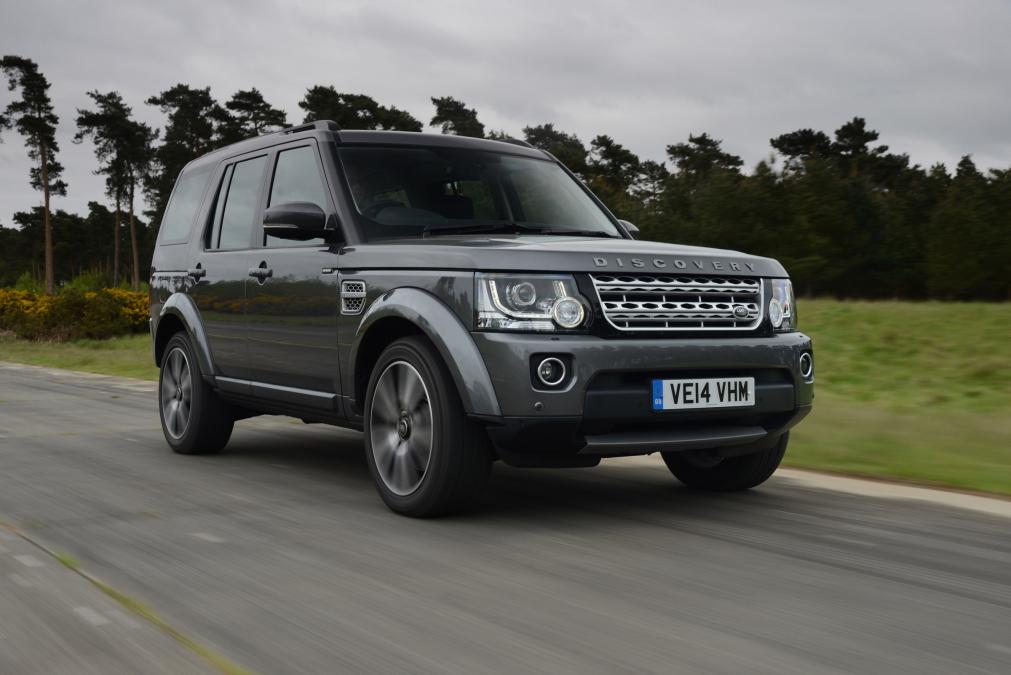
Land Rover hasn’t plucked out any old badge for this Discovery. The preceding two generations have both had special editions wearing the Landmark tag, and for winter 2015/2016 the name returns. In fact, the Landmark isn’t the only special-edition Discovery arriving – there’s a Graphite coming, too. But it’s the former we’ve driven here for the first time.

You’ll have to be really into the Discovery to notice specific differences. It’s based on the already top-spec HSE Luxury, but Land Rover has thrown in some snazzier 20-inch split-spoke alloy wheels, with black-painted bumper vents, mirror caps and grille. There are full-length, silver roof rails and the usual haul of Landmark badges on the bodywork.

As a further bonus, the Landmark exclusively debuts a new copper-coloured paint called Zanzibar. The model’s also available in four other, more subtle, shades, including our test car’s classy-looking Waitomo Grey. Inside, there are softer leather seats than you’ll find in any other Discovery, and various colour and trim options, too, including black lacquer veneer or grained-walnut finishing.


The Landmark builds on the HSE Luxury’s comprehensive kit list, so there’s a 825kW Meridian sound system, rear entertainment pack, digital TV and Windsor hide covering the top of the dashboard and armrests.

Elsewhere, it’s a traditional Discovery. While the interior is showing this model’s age, no other car mixes this much luxury with such sturdy, agricultural qualities. It’s roomy, too, and fits the bill as a genuine seven-seater, with plenty of room for adults in both the middle and rear rows.


There’s only one engine option, though: Jaguar Land Rover’s trusty 3.0-litre V6 diesel. While the powerplant is a smooth performer, the Land Rover’s heavy kerbweight and square shape result in high running costs – 36.7mpg and 203g/km of CO2 emissions are claimed, but on our tests we averaged a mere 26mpg.

It’s not cheap to buy, either. Approaching £56,000 is a lot for an ageing car – although the Landmark is still nearly £4,000 cheaper than the HSE Luxury.

Key specs

  • Model: Land Rover Discovery 3.0 SDV6 Landmark
  • Price: £55,995
  • Engine: 3.0-litre V6 diesel
  • Power: 252bhp
  • Torque: 600Nm
  • Transmission: Eight-speed automatic, four-wheel drive
  • 0-62mph: 8.8 seconds
  • Top speed: 112mph
  • Economy: 36.7mpg
  • CO2: 203g/km

Minggu, 20 Desember 2015

Posted by Unknown | File under :

By all rational measures the Defender is totally outclassed by modern off-roaders. Yet the Heritage is packed with charm, rewarding to drive and unrivalled off-road. And at £27,800, it looks like great value alongside the Adventure and Autobiography editions, which start at £43,495 and £61,845. If you want an SUV with huge character and surefire future classic status, then look no further.

Over the course of nearly 70 years and countless updates, the legendary Land Rover Defender has continued to set the standard for unstoppable off-road ability.

But ever-tightening emissions and safety regulations mean that time is running out for the famous four-wheel-drive machine, with production being wound down this year.

However, rather than mourn the loss of its iconic Defender, Land Rover is sending off its evergreen off-roader in style with a trio of ‘Celebration Series’ special-edition models.


The lavishly equipped Adventure and Autobiography are hugely desirable, but it’s this Heritage model that’s closest to the spirit of the original. As its name suggests, this machine is packed with retro touches that hark back to the earliest Land Rovers.

Only 400 Heritage models will be sold in the UK, available in this short-wheelbase 90 bodystyle or long-wheelbase 110, and all are finished in distinctive Grasmere Green metallic paint with a contrasting white roof.

Other old-school additions include the heavy duty steel wheels and the silver painted door hinges and bumpers.


Finally, the left-hand front wing gets a black and white HUE 166 badge, which is a direct reference to the registration plate of the oldest surviving Land Rover, affectionately known as ‘Huey’ by fans of the brand.

Climb into the Landie’s cabin and you’ll find some more nods to the past, such as the colour-coded red and yellow collars for the levers controlling the six-speed manual box and the dual-range transmission.

As with all Defenders, the driving position is high – you tower over other SUVs – and slightly cramped. The steering, gearshift and clutch are heavy, the punchy 120bhp 2.2-litre diesel is gruff and the ride bouncy, while our car’s chunky off-road tyres added extra vagueness to the handling.

Yet despite its dynamic shortfalls, the Defender is hugely rewarding to drive. There’s a direct connection between driver and machine, and it doesn’t take long before you’re totally absorbed in the driving experience – and amazed at how quickly this big machine can be hustled along.


But it’s when you head off the beaten track that it really comes into its own. It doesn’t have the hi-tech Terrain Response system of the latest Land Rovers, but seven decades of development mean it’s still the best 4x4 by far when the going gets tough.

Key specs

  • Model: Land Rover Defender 90 Heritage Edition
  • Price: £27,800
  • Engine: 2.2-litre 4cyl turbodiesel
  • Power/torque: 120bhp/360Nm
  • Transmission: Six-speed manual, dual range four-wheel drive
  • 0-62mph/top speed: 15.8 secs/90mph
  • Economy/CO2: 28.3mpg/266g/km

Kamis, 27 Agustus 2015

Posted by Unknown | File under :


Luxurious Land Rover Discovery is fantastic all-rounder that's big, bold and brilliant to drive on and off-road.


The Land Rover Discovery is a firm favourite of ours, having taken numerous class victories in our New Car Awards over the years. It balances refinement and luxury with go-anywhere ability.

It’s clear that the Land Rover Discovery sticks to a tried-and-tested formula. The current car can trace its roots back to the Discovery 3, which was launched in 2004, but constant development has kept the 7-seater at the top of its game. The 2014 model dropped the '4' from its name (it was called the Land Rover Discovery 4) and got a series of minor tweaks to its appearance in a bid to keep it at the front of the full-size SUV class.

Overall, the Discovery’s design hasn’t changed for 2015 – instead, Land Rover has turned its attention to the interior, upgrading the specification. The in-car tech isn’t as clever as the XC90’s, but the brand’s new £350 InControl option allows you to use apps on your Apple or Android smartphone via the in-car screen. On the mid-range SE Tech model there’s also sat-nav, parking sensors, cruise control, DAB and Bluetooth.


The fourth-generation Land Rover Discovery may well be the ultimate all-rounder. It mixes a relaxing driving experience with a pair of punchy diesel engines and a cabin that boasts luxury car quality with lots of space and seven seats.

Oh, and it's also one of the most capable off-roaders on the planet. It isn't cheap and not sporty to drive like a BMW X5, plus there are doubts over reliability, but this is the Swiss Army knife of cars.

Our choice: Discovery 4 3.0 SDV6 XS.


Constant evolution has kept the Land Rover Discovery looking fresh, although it’s helped no end by the distinctive, simple lines that give it a timeless appearance.

The tall bonnet, big headlight clusters and bright silver grille mean you’ll definitely see this SUV coming in your rear view mirror, and together with the expansive glass windows, chunky arch extensions and sills, plus massive 20-inch wheels, the Discovery looks imposing.

There are lots of traditional Land Rover design features, such as the clamshell bonnet and split tailgate, that add some extra visual impact and practicality, but overall, the look is more biased towards its off-road roots, hinting at this car’s considerable go-anywhere ability.

Like the exterior design, the Discovery’s cabin is more utilitarian than the rival Volvo XC90’s, but all of the gadgets are nicely integrated nonetheless. The infotainment screen is smaller and the graphics have a lower resolution – it takes longer to respond to your inputs than the Volvo’s tablet as well, but the familiarity of the system means it’s easy to use.


Leather trim comes as standard, and adds an upmarket air, but the Land Rover’s build quality still feels robust and up to anything you can throw at it, mixing refinement and sturdiness nicely.

The car feels more upmarket than the Toyota Land Cruiser and has a more modern design, while the fit and finish are first-class. There’s a premium feel to all of the switchgear and comfortable seats in all three rows.
All the panels have tight gaps, and with its chunky, angular proportions has the feeling of a very expensive Tonka toy that makes it more appealing than an Audi Q7.

The Land Rover Discovery has a single 3.0-litre V6 twin-turbodiesel on offer, with a healthy 252bhp on tap. This makes the Discovery good for 0-60mph in just 8.8 seconds.

The standard eight-speed auto is a big help to the car's on-road performance. Shift paddles allow you to take manual control of the box, but these seem surplus to requirements as the electronics do a good job of keeping you in the right ratio most of the time.

The soft chassis set-up on the air-suspension model makes for incredible long-distance comfort, but the Disco’s weight and height mean the body rolls heavily in corners, even at moderate speeds. There's quite a bit of wind noise, though.


Venture off the beaten track, and the Discovery demonstrates another level of ability; it’s fantastic. Simply raise the air-suspension to off-road mode and switch the Terrain Response system to the relevant conditions, and the electronics optimise the 4WD system to suit the terrain. There are centre and rear diff locks, low-range gears and plenty of hi-tech electronics designed to keep you going. You’re likely to lose your nerve before the Discovery gets stuck.

If you do head off-tarmac, then there are some options available that are designed to help you on your way. Wade Sensing checks the depth of water you’re fording, while the surround camera system relays images from four cameras, whether you’re on or off the road.

Land Rover is a perennially poor performer in our Driver Power satisfaction surveys, and its 2015 result proved no different. It ranked as the 29th brand out of 32, while its dealer network’s performance was consistent with this, finishing 28th in our most recent poll. As the Discovery has been on sale for more than 10 years now, most problems should have been ironed out – the Mk4 model tested here was voted the 68th best car to live with in our Driver Power 2015 top 200. Owners praised its ride quality and practicality. However, the results also show reliability can be patchy.

With one more airbag than the XC90, the Land Rover should be safe. As it’s basically unchanged from the Mk3 model, the last Euro NCAP crash test was back in 2006, where it received four stars overall. Bear in mind the assessment has changed a lot since then, but safety kit has been upgraded to include more airbags, as well as ESP, blind spot warning and reverse traffic alert. So although the Discovery can’t match the Volvo’s long list of hi-tech features, it should be reassuring.


You get a fantastic raised seating position and a first-class cabin. The dashboard has a luxurious mix of leather, wood and soft-touch plastics, plus big chunky air vents. There's lots of room for driver and passengers while hi-tech gizmos like the dual-view centre console screen are desirable. Other options include a set of five cameras that can help you negotiate tight spaces, whether you're in the middle of nowhere or a multi-storey car park.

The two-part tailgate opens to reveal a 543-litre boot, while the lower section doubles up as a handy seat. It also creates a flat boot lip to help loading. The Discovery’s split tailgate is a nice touch, and provides somewhere to sit on family days out, but it’s also quite tall, so you’ll have to lift luggage high to load the boot up. Also, with it down it’s hard to reach in from the outside to put the back seats up.

The manual seat-folding mechanism is clearly labelled and simple to use, although the rearmost seats are a bit heavy. Once up there’s lots of room, despite tight shoulder space, and two adults could easily sit in the back for a long journey.

Passenger space in all three rows is superb, with lots of headroom and storage, while the large glass area and three sunroofs give an airy feel. Getting in and out is easy, thanks to the Access suspension mode, which lowers the car by 5cm from normal driving height.


With a kerbweight of around 2,500kg and permanent four-wheel drive, there is only so much a diesel engine can do. Land Rover claims 32.1mpg, and even with gentle motorway runs we reckon most drivers could manage that.

It posts emissions of 213g/km, which when compared with the likes of the BMW X5 3.0d, is quite disappointing. The BMW manages much better figures - 38mpg and just 195g/km of CO2. Tyres will be expensive to replace and servicing will also be pricey.

For private buyers, depreciation of 58.3 per cent is excellent for such an expensive car, although this is offset by higher servicing costs than for the Toyota Land Cruiser.

Sabtu, 28 Maret 2015

Posted by Unknown | File under :

The Land Rover Discovery Sport is a luxurious compact SUV that’s designed to take on desirable models such as the BMW X3 and Audi Q5. Essentially a replacement for the ageing Freelander 2, the Discovery Sport is bigger and even more upmarket than its predecessor, plus it boasts a versatile seven-seat layout.

Externally, the Discovery Sport features a sleeker and more stylish look than the Freelander. In fact, with its rakish profile and slick detailing, the newcomer looks more closely related to the latest Range Rover models rather than the more humble Land Rover line-up. This theme continues inside, where you’ll discover classy design and plenty of top-notch materials.
 
Many of the Discovery Sport’s underpinnings are shared with Range Rover Evoque, but the adoption of an all-new multi-link rear suspension set-up has allowed Land Rover’s engineers to squeeze in the third row of seats. Also carried over from the Evoque are the tried and tested 2.2-litre diesel and the recently introduced nine-speed automatic gearbox, which is available as an option.


However, while this engine is durable, it lags behind the best in class for refinement and emissions – versions fitted with a six-speed manual gearbox emit 162g/km of CO2. A two-wheel drive eD4 model is due early next year, which should cost under £30,000 and promises to emit a more company car tax-friendly 119g/km.

On the road, the Discovery Sport feels composed and agile. The steering lacks feedback, but it’s fast and precise, helping you place the car with confidence. And while the low speed ride is a little firm, the Land Rover becomes more comfortable at speed. Even better, road and wind noise are well suppressed. The only weak link is the 2.2-litre diesel, which is gruff, particularly when extended. On the plus side, it delivers strong real world pace.

There are four trim levels to choose from – SE, SE Tech, HSE and HSE Luxury. All versions are well equipped, with heated seats, part leather trim, a DAB radio, Bluetooth connection and climate control featuring as standard.


Our choice: Discovery Sport SD4 SE Tech Auto.

Land Rover has its own distinct design language, and the new Discovery Sport ditches the squared-off lines of the Freelander in favour of bold curves inspired by the brand’s other models. In fact, if you put the larger Discovery and a Range Rover Evoque into a computer program to create a hybrid of the two, you’d probably get something similar to the Discovery Sport.

The rounded nose is pure Evoque, while the clamshell bonnet is a traditional Land Rover touch. The headlamps feature crosshair-style LED daytime running lights, and the tail-lamps get a similar treatment, while the black wheelarch trim is another Evoque design cue. There’s a mix of body-coloured and black window pillars, while the roof subtly curves back to a high-set rear end.
As in the Evoque, you can personalise the Discovery Sport with a contrast roof (£500) and different wheel designs, while the £1,500 Black Design Pack adds a black finish to the grille, roof, exterior trim and 20-inch wheels.

Climb inside, and the Discovery Sport is pure Land Rover. The climate controls, dash and switchgear are all taken from the Evoque, but that’s no bad thing, as it manages to feel like a premium product with a robust edge. Go for the auto, and you get a rotary gear selector that rises from the centre console, although unfortunately the driver’s footwell is awkwardly shaped, so you might struggle to find a comfortable position for your left foot.

Land Rover’s infotainment system is the real highlight inside. The new eight-inch high-resolution screen has a user-friendly interface, with clear labels and a responsive touchscreen, while 3D mapping and simple address entry mean the standard sat-nav is a breeze to use.


The Discovery Sport shares many of its underpinnings with the Range Rover Evoque. However, there have been some major changes, including the adoption of a new multi-link rear suspension set-up.
However, while the chassis has been reworked, the 2.2-litre diesel is carried over more or less unchanged from the old Freelander. With 187bhp and a muscular 420Nm of torque it packs plenty of firepower, but it simply can’t match the best for refinement.

It’s a little gruff at idle and sounds harsh when extended. Even so, Land Rover has worked hard to isolate the worst noise from the cabin, and at a cruise the engine note subsides to a faint background hum.

A six-speed manual gearbox is standard, but the optional £1,800 is well worth the extra outlay if can stretch to it. Not only is the transmission smooth and responsive, it allows you to make the most of the available real world performance by keeping the engine revs in the less intrusive mid-range. Outright acceleration is improved too, as the time for the claimed 0-60mph sprint drops from 9.8 seconds for the manual to a sprightly 8.4 seconds.

While the engine isn’t the last word in refinement, the rest Discovery Sport is well up to class standards. Most impressive is the lack of road noise. There’s virtually no tyre roar and only the biggest bumps transmit a muted thump into the cabin.

The Land Rover’s relaxing character is enhanced by the composed ride. There’s a firm edge to the suspension at low speed, but the new multi-link rear axle comes into its own the faster you go, and most bumps and potholes are effortlessly smoothed out. That said, it’s a shame that the Evoque’s excellent MagneRide adaptive dampers aren’t currently available, even as an option.

On the plus side, the Discovery Sport feels agile and alert through a series of corners. The steering is extremely sharp and direct, allowing the Land Rover to dive through bends with a car-like eagerness.
And while there’s not much in the way of feedback, the electrically assisted set-up is precise and faithful. Combined with the high-set driving position and excellent visibility, it allows you to place the Discovery with confidence.

On the road, the Discovery Sport feels quite large, and while the view ahead is great, the standard rear camera and parking sensors are essential when reversing. At least the light steering means it’s easy to manoeuvre.


Body movement is also well controlled, plus there’s plenty of grip, even on the standard fit all-weather tyres. Finally, the electronically controlled permanent four-wheel drive system delivers confidence-inspiring traction, even in the slipperiest conditions.

As with outgoing Freelander and current Evoque, the Discovery Sport benefits from the same simplified version of the firm’s clever Terrain Response system. Simply choose between Normal, Mud, Sand, Rocks and Snow modes, then let the car’s sophisticated traction control system do the rest.

And that’s not all, because you also get a variable hill descent control, an impressive wading depth of 600mm, plenty of ground clearance and excellent approach and departure angles. When the going gets tough, the Discovery Sport leaves its compact SUV rivals floundering.


While the Discovery Sport is all-new on the outside, under the skin it has plenty of parts from other models. The platform is the same as the Evoque’s, as is much of the switchgear. The SD4 diesel is the tried and tested Ford-derived unit from the Freelander, so it shouldn’t spring any surprises, either.
The only real question mark is over the stability of the new infotainment system – although from past experience, Land Rover keeps dealers informed of software updates to ensure everything works properly.

Unfortunately, the brand’s dealers don’t have a great reputation – they finished 28th out of 32 in our Driver Power 2014 survey, which is 15 places behind Hyundai. A major criticism for owners was their poor value for money, although that should be addressed by the Disco Sport’s £499 five-year servicing deal.

The most obvious upgrade over the old Freelander is the inclusion of what Land Rover calls a 5+2 seating layout. Thanks to the adoption of a compact multi-link rear suspension layout, engineers have managed to create space at the rear for a third row seats.

The two individual chairs can be pulled out of the floor of the 981- in one movement, while a sliding middle row allows for easy access and increased legroom. Even so, adults will only want to sit in the back for short journeys.


With the rear most seats stowed the boot boasts a healthy 981-litre capacity – although this figure is measured to the roofline rather than under the load cover. Fold the rear bench flat and the available space increases to a van-like 1,698-litres. There are also a number of handy hooks and a 12V power supply, plus the option of an adjustable loading rail system.

Elsewhere in the cabin there’s plenty of useful storage, numerous cupholders and the availability of up to seven USB sockets. The adoption of an electric handbrake frees up space on the transmission tunnel for a pair of lidded storage boxes, while there’s a neat trinket tray set into the dashboard ahead of the front seat passenger. It doesn’t take long to realise a lot of thought has gone into the Land Rover’s family-friendly layout. 

The Discovery Sport is a more upmarket machine than the Freelander, and that’s reflected in the price. Even an entry-level SE version will set you back £32,395, while the range-topping HSE Luxury model is a wallet-bashing £42,995. On the plus side, you do get a fair amount of kit for your money, with all versions getting heated seats, climate control, alloy wheels, Bluetooth connection and a DAB radio.

Less impressive are the Land Rover’s running costs, which are dealt an expensive blow by the continued use of the brand’s ageing SD4 diesel. Versions equipped with a manual gearbox emit a hefty 162g/km and promise 46.3mpg at the pumps, while auto versions claim and even less efficient 166g/km and 44.8mpg.

By comparison, a four-wheel drive BMW X3 20d features CO2 emissions of as little 131 g/km. A two-wheel drive eD4 version that emits 119g/km and promises to cost less than £30,000 arrives early in 2015, and will likely be the most popular choice for company car users.

There’s better news for private buyers, because our experts have calculated the Land Rover will hold onto to between 52 and 55 percent of its new value after three years.