Kamis, 27 Agustus 2015

Posted by Unknown | File under :

Jaguar XF saloon has two tough acts to follow in the new XE and its predecessor, but it delivers.

While Jaguar’s new XE is getting all the column inches and flashy TV adverts at the moment, the British brand knows the larger XF is where its reputation is at stake.

Why? Well, although the XE was always going to be a big step up from the X-Type, the new XF has to replace a car that arguably created the modern-day Jaguar. Improving a successful recipe is tricky – especially for a small company with big ambitions.

Don’t expect a total rework, though. Behind all the ceremony of the XE’s launch, Jag’s engineers have been quietly hard at work taking all the good things that made the XF successful and steadfastly tweaking them. The car improves in all the areas you’d expect: it’s lighter thanks to new aluminium-intensive architecture shared with the XE, there’s a wealth of new tech and safety kit, it’s roomier and a range of new, more efficient engines also features.


Plus, he new XF allows Jaguar to attack the all-important fleet market in a way it has never done before – engaging in an all-out war with the likes of the Mercedes E-Class, BMW 5 Series and Audi A6. Previously we got our first taste of the predicted bestseller and the one fleets are expected to lap up – the 104g/km 2.0d fitted with one of Jaguar’s new Ingenium engines. It’s a strong performer, but we came away from our drive thinking that it’s the engine you’d buy with your head, not with your heart.

Knowing that fleet buyers aren’t the be all and end all, the brand is also offering a tweaked version of the old XF’s 3.0-litre V6 diesel, which will tickle not only the more well heeled company exec, but also the droves of private buyers Jag wants to appeal to. It’s a familiar JLR engine, yet here in the XF (with 296bhp and a whopping 700Nm of torque), it’s being viewed as one of two performance units on offer from launch.


We sampled the powerful diesel in super-posh Portfolio trim (pictured), but in the UK, it can only be ordered in range-topping sporty S trim – joining the other racy S with a thumping 3.0-litre supercharged V6 petrol engine from the F-Type. All S models get a unique bodykit, including bigger front grilles and a discreet boot lip spoiler. Trick Adaptive Dynamics are standard, too, as are two-tone, 19-inch rims and red brake calipers.

With power and torque figures like that, it’s hardly a surprising conclusion that the 3.0 TDV6 rightly wears the S badge. From as little as 2,000rpm, the full 700Nm of torque kicks in – delivering 0-62mph in just 5.8 seconds. Push on, and the familiar Jag V6 growl appears, providing an aural pleasure the 2.0-litre lacks. The V6 diesel only comes with a ZF eight-speed auto box, which fires through the gears. Pull on the paddle to change down, though, and it sometimes hesitates, yet it’s admittedly a small niggle.

It won’t break the bank to run, either, with 51.4mpg economy and CO2 emissions of 144g/km slotting the XF S 3.0 TDV6 into the 26 per cent Benefit in Kind tax bracket. For comparison, the super-frugal hybrid Lexus GS 300h falls into the 17 per cent band and is exempt from the diesel surcharge.


The rest of the package is equally impressive, too. Jag has worked hard on making the XF top of the class for driver fun, and it easily rivals the 5 Series for handling prowess. The steering is weighty and crisp, while the double-wishbone suspension at the front and a new system called ‘Integral Link’ at the rear give near-flawless ride quality.

Behind the F-Type-style wheel is a nice place to be, too. It’s roomy up front, but while the build quality is a welcome step up from the old car, it lags a little behind the A6 for perfection.

It’s much the same case with the eight-inch infotainment screen (our car had the larger 10.2-inch system) that features Jag’s InControl Touch system – you can’t help but feel BMW’s iDrive is a little bit slicker.

Posted by Unknown | File under :


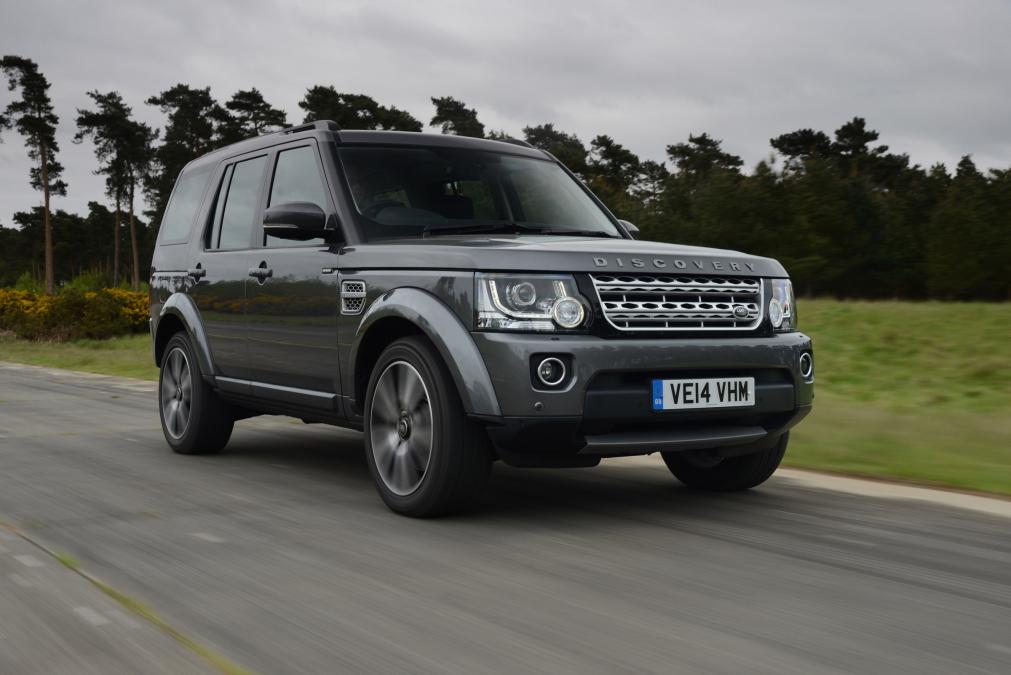
Luxurious Land Rover Discovery is fantastic all-rounder that's big, bold and brilliant to drive on and off-road.


The Land Rover Discovery is a firm favourite of ours, having taken numerous class victories in our New Car Awards over the years. It balances refinement and luxury with go-anywhere ability.

It’s clear that the Land Rover Discovery sticks to a tried-and-tested formula. The current car can trace its roots back to the Discovery 3, which was launched in 2004, but constant development has kept the 7-seater at the top of its game. The 2014 model dropped the '4' from its name (it was called the Land Rover Discovery 4) and got a series of minor tweaks to its appearance in a bid to keep it at the front of the full-size SUV class.

Overall, the Discovery’s design hasn’t changed for 2015 – instead, Land Rover has turned its attention to the interior, upgrading the specification. The in-car tech isn’t as clever as the XC90’s, but the brand’s new £350 InControl option allows you to use apps on your Apple or Android smartphone via the in-car screen. On the mid-range SE Tech model there’s also sat-nav, parking sensors, cruise control, DAB and Bluetooth.


The fourth-generation Land Rover Discovery may well be the ultimate all-rounder. It mixes a relaxing driving experience with a pair of punchy diesel engines and a cabin that boasts luxury car quality with lots of space and seven seats.

Oh, and it's also one of the most capable off-roaders on the planet. It isn't cheap and not sporty to drive like a BMW X5, plus there are doubts over reliability, but this is the Swiss Army knife of cars.

Our choice: Discovery 4 3.0 SDV6 XS.


Constant evolution has kept the Land Rover Discovery looking fresh, although it’s helped no end by the distinctive, simple lines that give it a timeless appearance.

The tall bonnet, big headlight clusters and bright silver grille mean you’ll definitely see this SUV coming in your rear view mirror, and together with the expansive glass windows, chunky arch extensions and sills, plus massive 20-inch wheels, the Discovery looks imposing.

There are lots of traditional Land Rover design features, such as the clamshell bonnet and split tailgate, that add some extra visual impact and practicality, but overall, the look is more biased towards its off-road roots, hinting at this car’s considerable go-anywhere ability.

Like the exterior design, the Discovery’s cabin is more utilitarian than the rival Volvo XC90’s, but all of the gadgets are nicely integrated nonetheless. The infotainment screen is smaller and the graphics have a lower resolution – it takes longer to respond to your inputs than the Volvo’s tablet as well, but the familiarity of the system means it’s easy to use.


Leather trim comes as standard, and adds an upmarket air, but the Land Rover’s build quality still feels robust and up to anything you can throw at it, mixing refinement and sturdiness nicely.

The car feels more upmarket than the Toyota Land Cruiser and has a more modern design, while the fit and finish are first-class. There’s a premium feel to all of the switchgear and comfortable seats in all three rows.
All the panels have tight gaps, and with its chunky, angular proportions has the feeling of a very expensive Tonka toy that makes it more appealing than an Audi Q7.

The Land Rover Discovery has a single 3.0-litre V6 twin-turbodiesel on offer, with a healthy 252bhp on tap. This makes the Discovery good for 0-60mph in just 8.8 seconds.

The standard eight-speed auto is a big help to the car's on-road performance. Shift paddles allow you to take manual control of the box, but these seem surplus to requirements as the electronics do a good job of keeping you in the right ratio most of the time.

The soft chassis set-up on the air-suspension model makes for incredible long-distance comfort, but the Disco’s weight and height mean the body rolls heavily in corners, even at moderate speeds. There's quite a bit of wind noise, though.


Venture off the beaten track, and the Discovery demonstrates another level of ability; it’s fantastic. Simply raise the air-suspension to off-road mode and switch the Terrain Response system to the relevant conditions, and the electronics optimise the 4WD system to suit the terrain. There are centre and rear diff locks, low-range gears and plenty of hi-tech electronics designed to keep you going. You’re likely to lose your nerve before the Discovery gets stuck.

If you do head off-tarmac, then there are some options available that are designed to help you on your way. Wade Sensing checks the depth of water you’re fording, while the surround camera system relays images from four cameras, whether you’re on or off the road.

Land Rover is a perennially poor performer in our Driver Power satisfaction surveys, and its 2015 result proved no different. It ranked as the 29th brand out of 32, while its dealer network’s performance was consistent with this, finishing 28th in our most recent poll. As the Discovery has been on sale for more than 10 years now, most problems should have been ironed out – the Mk4 model tested here was voted the 68th best car to live with in our Driver Power 2015 top 200. Owners praised its ride quality and practicality. However, the results also show reliability can be patchy.

With one more airbag than the XC90, the Land Rover should be safe. As it’s basically unchanged from the Mk3 model, the last Euro NCAP crash test was back in 2006, where it received four stars overall. Bear in mind the assessment has changed a lot since then, but safety kit has been upgraded to include more airbags, as well as ESP, blind spot warning and reverse traffic alert. So although the Discovery can’t match the Volvo’s long list of hi-tech features, it should be reassuring.


You get a fantastic raised seating position and a first-class cabin. The dashboard has a luxurious mix of leather, wood and soft-touch plastics, plus big chunky air vents. There's lots of room for driver and passengers while hi-tech gizmos like the dual-view centre console screen are desirable. Other options include a set of five cameras that can help you negotiate tight spaces, whether you're in the middle of nowhere or a multi-storey car park.

The two-part tailgate opens to reveal a 543-litre boot, while the lower section doubles up as a handy seat. It also creates a flat boot lip to help loading. The Discovery’s split tailgate is a nice touch, and provides somewhere to sit on family days out, but it’s also quite tall, so you’ll have to lift luggage high to load the boot up. Also, with it down it’s hard to reach in from the outside to put the back seats up.

The manual seat-folding mechanism is clearly labelled and simple to use, although the rearmost seats are a bit heavy. Once up there’s lots of room, despite tight shoulder space, and two adults could easily sit in the back for a long journey.

Passenger space in all three rows is superb, with lots of headroom and storage, while the large glass area and three sunroofs give an airy feel. Getting in and out is easy, thanks to the Access suspension mode, which lowers the car by 5cm from normal driving height.


With a kerbweight of around 2,500kg and permanent four-wheel drive, there is only so much a diesel engine can do. Land Rover claims 32.1mpg, and even with gentle motorway runs we reckon most drivers could manage that.

It posts emissions of 213g/km, which when compared with the likes of the BMW X5 3.0d, is quite disappointing. The BMW manages much better figures - 38mpg and just 195g/km of CO2. Tyres will be expensive to replace and servicing will also be pricey.

For private buyers, depreciation of 58.3 per cent is excellent for such an expensive car, although this is offset by higher servicing costs than for the Toyota Land Cruiser.
Posted by Unknown | File under :

The awesome Lamborghini Aventador SV might just be Lambo's best car yet.

The SV is almost certainly the best car Lamborghini has ever made. From its ear-splitting exhaust note, to the proper head-swivelling supercar styling it fills the brief that Lambos should be the most outrageous cars on the road. But there's real substance behind the drama - usable downforce, delicate steering, huge grip and balance at the limit all combine to make it enormous fun to drive, so long as you can find the space to exploit its epic performance.

So where do you start when trying to describe what the new £321,723, 740bhp, 217mph Lamborghini Aventador SV is like, not just to drive but to look at, to sit inside, to listen to, or even just to smell? At the beginning, I suppose, which was well over four years ago now when the Aventador was first unleashed upon the world.

Back then, in 2011, the Aventador reshaped the headlines not merely because of its outrageous good looks and thundering 6.5-litre V12 engine. It stood out from those around it because it had a full blown carbon fibre chassis tub and racing car-like pushrod double wishbone suspension, and even back then it was obvious to anyone interested that there was quite  a lot more to come from the car.


A year or so later the Roadster version was produced, and an excellent progression it was, too. But even with its roof removed and V12 engine exposed to the elements to give it an extra hit of drama, the Aventador still had more to give. You just knew, deep down, that its four wheel-drive mid-engined chassis could handle more power, and that the entire car was crying out for the lighter, faster, better treatment that’s been at the heart of Sant Agata’s SV models since the Miura first wore the badge in 1971. And now four and a bit years later here it is, the SV version – which stands for Super Veloce and translates to “Extremely Fast”.

Several aspects define the SV as a more focused machine above and beyond the regular Aventador. Its 6.5-litre V12 has been tuned internally and externally to produce an extra 49bhp, giving it a whopping 740bhp in total. The engine also revs 250rpm higher and rotates more freely thanks to a new variable valve timing system, allied to a brand new exhaust system.

The seven-speed gearbox has also been tweaked electronically to make the shift times faster but more violent than ever, with upshifts thumping through in a mere 50 milliseconds in Corsa mode. Likewise the Haldex four-wheel-drive system has been re-engineered to allow as much as 90 per cent of torque to be deployed via those enormous rear tyres under hard loads.

Turn the traction control off in the SV and you are much more on your own than you are in the regular Aventador. A clumsy boot on the throttle will turn the car right round if the ESC has been disengaged, unlike on the standard car.


Perhaps the biggest step forward made by the SV, however, is its new aerodynamic package. Thanks to a monstrous new splitter at the front, a redesigned underside plus a new diffuser and three stage adjustable wing at the rear, the SV generates a staggering 170 per cent more downforce than the regular Aventador. On the far side of 120mph it produces nearly 250kg of the stuff, with 60 per cent arriving at the rear axle to keep the tail rooted to the ground in quick corners.

Lamborghini claims the SV is 150 per cent more aerodynamically efficient than the standard car, and that’s the number that counts most when it comes to the management of air, because it takes into account drag as well as pure downforce. It would be relatively easy, say the car’s engineers, to generate vast amounts of downforce, but that’s no use whatsoever if the drag increases exponentially at the same time. But with the SV this isn’t the case. The car is almost as clean through the air as the standard Aventador yet generates massively more aerodynamic grip at the same time.

Mate all these individual elements to a 50kg reduction in kerb weight (thanks to lighter forged alloy wheels and more extensive use of carbon inside and out) and you begin to get an inkling as to how  serious a machine the SV actually is. Except, of course, nothing can truly prepare you for the onslaught of sensations that hit you the moment you fire up the SV and begin to drive it.


On the move it feels instantly different to the regular Aventador. The ride is urgent but not ridiculously stiff, not on the track at Barcelona where I drove it, at any rate. The new variable ratio steering rack feels incredibly natural in its responses but also way crisper and much more incisive than the standard car’s steering system. And the exhaust note is twice, if not three times as loud – to a point where you do wonder how on earth the SV manages to pass European noise tests, even if it does have exhaust baffles that stay shut until beyond 2000rpm. 

But it’s what happens when you put your foot down and hold it there for a couple of seconds in a low gear that will define your impression of the Aventador most dramatically. The wallop of acceleration is so violent in second, third and even fourth gear that it actually comes as a shock to begin with, even though I’ve driven Aventadors aplenty before.

It doesn’t feel as ridiculous as a LaFerrari in terms of pure, straight line energy, but neither does it feel like it would be murdered by Maranello’s masterpiece along any straight. Considering it costs less than a third of the Ferrari and there will only ever be 600 examples made over the next two years – guaranteeing the SV almost as much exclusivity as the La Ferrari – that makes it seem like peculiarly good value to me.
Potential owners of the SV would seem to think so, too, Lamborghini’s charismatic boss Stefan Winkleman proudly claiming that virtually the entire run of 600 cars has already sold out, the biggest market by far being the USA.


On a circuit as wide and open like the one at Barcelona, home of the Spanish GP, most road cars would feel hopelessly at sea, and not very fast. The straights are long, the corners fast, with only a couple of points on the lap where you drop much below three figures. But the SV is that rarest of road cars that feels entirely at home on a circuit like this.

It eats the straights almost as if they aren’t there, and in the corners it feels beautifully planted, its bespoke Pirelli Cora tyres generating huge grip at both ends, even with the ESC stability system switched off (especially with it switched off, in fact, because with it on there’s so much power available the system constantly tries to trim the throttle back).


The brakes, as you;d expect in a car such as this nowadays, feature enormous great carbon ceramic discs at all four corners, and the feel and power of the system is virtually impossible to fault. The SV stopped time and again, without fade, from ultra high speeds for lap after lap. Bearing in mind that it weighs over 1600kg with fluids plus a driver on board, that’s a deeply impressive achievement.

But not as impressive as the way it sounds or accelerates or goes round corners. Or, indeed, turns heads wherever it goes. The SV is a serious car for serious enthusiasts, no question about that, yet perhaps its greatest trick of all is that it’s relatively easy to drive at the same time. And that was always one of the car’s key engineering briefs; Lamborghini wanted to make an “Extremely Fast” version of the Aventador, yes, but the bosses also wanted to make a car that is approachable and friendly to drive. Otherwise, they concluded, what would be the point?

Key specs

  • Price: £321,723
  • Engine: 6.5-litre V12
  • Transmission: 7-speed auto, four wheel drive
  • Power/torque: 740bhp/690nm
  • 0-62mph/top speed: 2.8s/217mph
  • Economy/CO2: 17.6mpg/370g/km
  • On sale: Now

Rabu, 26 Agustus 2015

Posted by Unknown | File under :


The Chevrolet Trax is a rival the Nissan Juke, offering value for money and rugged off-road looks.


The Chevrolet Trax is an affordable crossover that competes against the likes of the Nissan Juke, Renault Captur and Peugeot 2008. It shares its platform with the Vauxhall Mokka but has a streamlined two model line-up: the LS and higher-spec LT. It also shares the same petrol and diesel four-cylinder engine range as the Vauxhall and is available in two and four-wheel drive. The design of the Trax is unique, though, with more brash styling in-line with the rest of the American manufacturer’s line-up, taking influence form the larger Captiva and Camaro muscle car. The interior quality is lacking compared to its rivals, but there are plenty of storage areas and a versatile seating arrangement that maximises luggage space.
The Chevrolet Trax is designed to build on the manufacturer’s SUV roots, which include the now 75-year-old Chevvy Suburban. So its exterior has been styled to reflect the rugged, 4x4 image that Chevrolet wants to project: massive wheel arches, a high nose and ‘power dome’ bonnet with signature Chevrolet two-piece grille. This all helps the Trax stand out a little from the Mokka that it’s based on. Then there’s the sloping roofline and roof rails leading towards a strong C-pillar design. There’s also off-road cladding around the bottom of the car, with silver skid-plates noticeable thanks to its high ground clearance. The interior is less impressive, though. The materials used around the cabin look fine on first glance, but on further inspection feel cheap and scratchy. Higher spec LT cars come with MyLink technology, which allows you to link apps from your smartphone to the car, as well as controlling music and calls. This is all controlled via a large touchscreen that has a neat appearance and is uncluttered. 


The Trax is based on the same platform as the Vauxhall Corsa and Chevrolet Aveo, which means it drives well for a crossover. The raised ride height does mean there’s excessive body roll and this is pronounced in even the slightest of corners. Its seating position is higher, of course, but the steering wheel and gearshift are well placed. The entry-level 114bhp four-cylinder 1.6-litre petrol has the least power, but even the 138bhp 1.4-litre turbo petrol feels sluggish, with its automatic gearbox a poor match. You need to give the throttle a severe prod to get things moving, as the transmission won’t change down otherwise. There is a switch on the side of the gearlever that enables you to perform your own shifts, but its positioning makes it clumsy to use. The 130bhp 1.7-litre diesel engine has a decent 300Nm of torque which, with the six-speed manual transmission, is much smoother. Unfortunately, the diesel is noisy, whether you’re driving at low or high speeds. Get the car up to speed and this is then combined with excessive wind noise. The ride also disappoints - it never feels settled and has a tendency to bounce over poor surfaces.


The Trax has a five-star Euro NCAP rating with six airbags, ABS, brake-force distribution and Hill-Start Assist standard across the range. There’s optional Hill-Descent Control as well, adding to the off-road capabilities of the Trax. Reliability should be strong, as the Trax uses engines shared not only with the Mokka, but proven in the Chevrolet Aveo and across a number of other Vauxhall cars. The Trax comes with a five-year, 100,000-mile warranty that includes roadside assistance for the first 12 months. 

The Trax shines in terms of space and its usability. There are eight different seating configurations, which includes the ability to fold the front passenger seat flat for 1,370 litres of space. That’s more than the 830 litres offered in the Nissan Juke but less than the Skoda Yeti, which has 1580 litres. With the rear seat in place, the Trax has only 356 litres of space, compared to the Juke’s 550 litres and the Yeti’s 416 litres. A great deal of thought has been put into designing the Trax's interior, though, with 19 storage areas – including four cup-holders in the centre console alone and a second glovebox that contains the aux-in point to hide away your MP3 player. There’s also the benefit of the high ground clearance, underbody protection and wheelarch cladding making the Trax more resilient to rough conditions. The all-wheel drive system is electronic and doesn’t require any hub-locking nor manual selection, and feels much more stable and composed than front-wheel-drive versions. There’s also the convenience of cruise control, Bluetooth and push-button start on all models. 


The front-wheel drive diesel-powered Trax with the manual gearbox is the pick both in terms of drivability and efficiency. It's capable of 62.7mpg and 120g/km of CO2, which is better than both the most efficient Nissan Juke’s 55mpg and 129g/km and is on a par with the Skoda Yeti’s 61.0mpg and 119g/km of CO2. Stop-start is standard on all manual cars, while electric power steering, which also saves fuel, is standard across the range. Four-wheel-drive models are less efficient, with the manual all-wheel drive diesel delivering 57.6mpg and 129g/km of CO2, while the petrol 1.4-litre turbo with all-wheel drive managing 44.1mpg and 149g/km of CO2.


Selasa, 25 Agustus 2015

Posted by Unknown | File under :


The Ferrari 458 Italia delivers awesome performance, razor-sharp handling and jaw-dropping looks.


When the Ferrari 458 was unveiled in 2009 as a replacement for the Ferrari 430, it quickly became the benchmark for the supercar world.

A rival to the Aston Martin V8 Vantage, Porsche 911 and McLaren 650S, the mid-engined Ferrari 458 Italia is available in two body styles - a coupe, and a Spider convertible. Both have eyewatering levels of performance thanks to the 4.5-litre V8 in the coupe, and the 4.4-litre V8 in the Spider.

In terms of looks, the Ferrari 458 ticks all the supercar boxes thanks to a gorgeous, aerodynamically influenced body capable of turning heads at 1,000 paces. Inside, the high quality cabin is focused on the business of driving with a Formula 1 influenced steering wheelcarrying all the major controls.

The 458 doesn't disappoint behind the wheel either. The Ferrari seven-speed dual-clutch gearbox shifts in the blink of an eye, while the standard ceramic brakes deliver massive stopping power.

Top it off with searing performance, hugely engaging handling and some old-school Ferrari magic, and the 458 is simply sensational. If the standard car doesn't provide enough thrills, Ferrari also makes a more hardcore 458 Speciale version that takes the visceral excitement to another level.

The Ferrari 458 Italia comes at a premium almost as sobering as its 0-62mph time of 3.4 seconds. It starts at around £179,000 and that's before you've even looked at the options list.


The Ferrari 458 is a seriously good-looking car and it's safe to say that there are few cars out that which deliver more head-turning appeal.

Designed by the iconic Italian styling house Pininfarina, the Ferrari 458 looks like everything a supercar should be. The body combines advanced technological features such as active aerodynamic and cooling elements with the traditional looks you'd associate with a supercar - an aggressive nose, slender headlights, taught profile and a stunning rear end.

Step inside the 458, and the cabin provides everything you'd expect from a modern Ferrari. It's exotic, performance orientated and most of all, well-built - a far cry from some Ferraris of old.


You don't need to be Fernando Alonso or Kimi Raikkonen to enjoy driving the Ferrari 458, as the Manettino dial on the steering wheel allows the throttle, gearshift, stability control and dampers to be tailored to the driver's ability level.

Generally speaking though, driving the Ferrari 458 is a sensory experience like no other.The engine note from the V8 is fantastic, the acceleration is beyond words and the controls transmit massive amounts of feedback. What's more, the steering is sharp and precise and there is a huge amount of grip, too.

Overall, the Ferrari 458 remains fast and packed with character both on the road and the track.

The Ferrari 458 is well-engineered  and packed withFormula 1 inspired technology. What's more, it's exceptionally well built, and UK buyers also benefit from a four-year warranty.

In addition to the driver and passenger airbags, Ferrari also fits the 458 with side airbags and the stability control system helps it feel well planted in all weather conditions.


The Ferrari 458 is proof of how much supercars have moved on over the years, as it's surprisingly easy to get on with in the real world.

The adaptive dampers mean the 458 has a reasonably compliant ride, while the supportive and comfortable seats mean its great for long journeys.

As it's strictly a 2+2, the Ferrari 458 isn't exactly the first degree in practicality butthat's not what you buy one for, is it?

Ferrari aims to make life easier thanks to a small but deep boot in the nose, as well as a useful luggage shelf behind the seats.

There is also an extensive options list for the 458, and most customers specify several thousand pounds worth of bespoke trim and detailing. Ferrari also sells personalised luggage kits, if that's your thing. 


The Ferrari 458 Italia may be many things, but with its starting price of around £178,000, cheap isn't one of them.

It also won't be too kind on the wallet as a result of high running costs. The 4.5-litre coupe emits 275g/km of CO2 and returns 20.6mpg, while the 4.4-litre unit which powers the Spider and the Speciale manages 23.9mpg. If you drive the 458 as Ferrari intended, you’ll be lucky to see double figures.

Ferrari has done its bit for the environment, however, by offering its HELE (High Emotion Low Emission) stop-start system as an option.

As part of the price, Ferrari includes its Genuine Maintenance programme that covers all standard items. With 12,500-mile intervals, there's no mileage restriction and the deal is transferable when the car is sold.

Senin, 24 Agustus 2015

Posted by Unknown | File under :

Up until now the e-NV200 five-seater has not made a large amount sense for most buyers with the Leaf electric supermini representing better value for money. Now with seven seats the e-NV200 makes a far better case for itself. Indeed, for taxi companies and hotels looking to shuttle their customers around on electric power, it’s in a class of its own. Buyers need to be committed to going green, however, as conventionally-powered alternatives offer better value for money, space and driving enjoyment.

Nissan isn’t only a market leader in electric cars but electric vans as well. Its e-NV200 small van has been leading the electric LCV market since December 2014, becoming a top choice for companies looking to make zero emission deliveries. Available as a panel van and a five-seat combi, there’s now a more practical people carrying version sporting seven seats.

It’s taxi companies, private hire firms, fleets and hotels Nissan is targeting with its e-NV200 7-seater as it’s these groups of people who have been haranguing Nissan to build one. Up until now they’ve had to rely on more conventional seven-seaters like the Ford Galaxy or put up with carrying just five in e-NV200 five-seater models if they wanted to be ‘green’.

As this is essentially a van with windows – and sliding windows at that – adding two more seats has been a simple job requiring no structural changes. Two decently sized chairs have been placed in the boot and there’s loads of headroom thanks to the vehicle’s boxy van origins. Legroom is a little tight for those over about five foot 10 inches and there’s no separate ventilation – the only windows that open are in the second row and they pop out and slide rather than winding down.


However, don’t expect the seats to cleverly fold into the floor like those you’d find in a car-based MPV such as the Volkswagen Sharan or the new Ford Galaxy. As it’s a remodeled van there’s a completely flat floor and the seats are latched to it. Should you need to carry just five people and have extra space for luggage, the two rearmost seats fold up and can be strapped to the sides. It’s hardly elegant but it’s a functional solution meaning you don’t have to remove the seats and leave them behind. Speaking of boot space, the seven-seat e-NV200 models have 870 litres on offer when all seven seats are being used; fold the two rearmost seats to the side and tumble the second row forwards and there’s a cavernous 2,940 litres – that’s 601 litres more than the new Ford Galaxy offers.

Elsewhere in the cabin the plastics are scratchy but they are all screwed together well, there’s a van-like upright driving position and the steering wheel and CarWings telematics system from the Leaf. The seven-seat option is available on the e-NV200 Combi or Evalia models and there’s a Rapid and Rapid Plus version of each.


We tested the top-spec £27,260 Evalia Rapid Plus which comes with not only privacy glass, air conditioning, heated steering wheel and heated front seats (which allow you to keep warm and not use the air con on full blast and drain the battery in winter). It also gets 17-inch alloys and sat-nav along with fast 6.6kW AC on-board charging (hence the ‘Rapid Plus’ name). The standard rapid (50kW DC) ‘CHAdeMO’ charging port also features and can recharge the e-NV200’s lithium ion batteries to 80 per cent in 30 minutes.

The claimed range from the lithium ion batteries is 106 miles but on our test route around Paris in 36-degree heat with the air con on full blast, our e-NV200’s batteries took a pounding, depleating the range rapidly. Even in normal temperatures and driving conditions you can only really expect between 70 to 80 miles on a full charge – as long as you don’t try out its 14-seconds 0-62mph sprint time or 76mph top speed too regularly.

Behind the near-upright steering wheel, the e-NV200 is nowhere near as swift as its Leaf brother, but more than quick enough to zip through traffic. There’s little steering feel – but that hardly matters in a vehicle like this – the brakes are nicely progressive even if the ride is hard.


The ride, however, is the least of the e-NV’s problems. You can buy the seven-seat versions outright (with the batteries) for between £23,400 and £27,260 (both after the £5,000 government grant), or if you opt to lease the batteries the price tumbles to between £19,895 and £22,255 (again, after the grant). Leasing plans depend upon mileage and contract length and range from £73.20 to £127.20 a month. In simple money terms, it makes the e-NV200 an expensive option putting it up against not only the new Ford S-MAX and Grand Tourneo Connect models, but also within sniffing distance of the significantly larger Volkswagen Transporter Shuttle.

When viewed pound-for-pound against competition like that, the e-NV200 7-seater models do not stack up well – but for companies who undertake short trips, have reliable access to charging points and are committed to embracing electric motoring, the e-NV200 is in a class of its own.    

Key specs

  • Price: £27,260 (after £5,000 govt grant)
  • Engine: Electric motor
  • Power/torque: 108bhp/254Nm
  • Transmission: Single-speed, front-wheel drive
  • 0-62mph/top speed: 14s/76mph
  • Range: 106 miles
 

Kamis, 20 Agustus 2015

Posted by Unknown | File under :


New 675LT supercar offers P1 thrills for a quarter of the price.


Be in no doubt, the 675LT is a big leap forwards from the 650S – a car that was already right at the top of its class. It’s a textbook example of how removing weight from a car adds ability in every other dimension. And when you mix such a reduction in mass with a series of other well judged improvements to the engine, chassis, steering, brakes and so on, you end up in a very good place indeed. And that’s precisely where the 675LT now sits. For the time being, it is king of the hill.

McLaren Automotive has come a long way in a short space of time, since the first 12Cs were unleashed upon the world in 2011. And of all the cars it has produced over those past four years, this new 675LT is arguably the most impressive of them all.

Why? Because although it may not contain as much technology or be quite as fast as the £1million P1, in reality it’s not that far behind. Yet it costs a quarter of the price of the P1, at ‘just’ £259,500, which might just explain why all 500 examples that McLaren will build over the next two years are now officially sold out.


We drove the car around Silverstone and on the roads surrounding Britain’s most famous GP circuit last week, and after half a day at the wheel realised that McLaren isn’t exaggerating when it says the 675 is “closer to the P1 dynamically than it is to the 650S”. And remember, the 650S was itself a huge leap forwards in every dimension compared with the original 12C.

Power from the now familiar-but-modified 3.8-litre twin-turbo V8 rises by 25bhp to 666bhp (or 675PS – hence the first part of the car’s name). The LT tag stands for “long tail”, in homage to the F1 GTR long tails developed for GT racing in the late nineties.


Torque has also gone up to 700Nm, but the biggest upgrade of all is what’s no longer there; thanks to an extensive weight-saving programme, the 675LT is a full 100kg lighter than the 650S.

Mate this with those small but significant increases in power, plus a wider track front and rear, stiffer springs, a 20mm drop in ride height and super-sticky new Pirelli Trofeo tyres, and it becomes a very different animal indeed.


On the road, the 675 retains a surprising degree of civility to its ride and general dynamics, despite its more focused intentions – so long as you select Normal for its electronic chassis set-up. This means it still offers a huge breadth of ability for this kind of car – more so than any rival, including the Ferrari 488 GTB.

Switch to Sport, however, and the stiffer suspension settings instantly make the 675 feel much more alive, but also busier beneath your backside. And if you then engage Sport for the drivetrain programme as well (the chassis and drivetrain have their own separate settings), the gearchange becomes faster and far more physical than before, the exhaust note even more guttural, the throttle response sharper and harder edged.


It really does deliver a Jekyll and Hyde kind of transformation. On track, the sharper steering rack and tweaked suspension give the 675 so much more turn-in bite and balance mid-corner compared with the 650S.

And down the straights, it felt a little bit ridiculous to be honest, with never-ending acceleration and even better stopping power, thanks partly to those new Trofeo tyres, whose sidewalls are stiffer and don’t allow so much squirm under heavy braking. And the lap time proved it. In the end, it was less than two seconds slower than the P1 by our casual calculations.


The level of acceleration is now borderline uncomfortable on the public road, no matter which of the various drive programmes you might have selected. There is still some lag from the V8 twin-turbo, but only in the last four of the seven forward gears. In third or below the response is pretty much instant, and when full boost arrives at around 4,300rpm, you really do need to be right on top of your game to deal with it.

The numbers say the 675 can get from 0-62mph in 2.9 seconds and from 0-124mph (200kmh) in just 7.9 seconds; this is a rear-wheel-drive car we are talking about, remember. But if anything, it feels even faster than those bare statistics suggest.


Top speed is 205mph, which is no more than competitive with its key rivals but, says McLaren, “we’re not really concerned about top speed”.

What the company will be concerned about is how the 675 stacks up beside Ferrari’s new 488 GTB, which costs a not insignificant £75,526 less. The answer is: very well indeed in all departments, even if the McLaren feels no faster than the Ferrari in a straight line.

Key specs

  • Price: £259,000
  • Engine: 3.8-litre V8, twin-turbo
  • Power/torque: 666bhp/700Nm
  • Transmission: Seven-speed automatic, rear wheel drive
  • 0-62mph/top speed: 2.9 secs/205mph
  • Economy/CO2: 24.2mpg/276g/km
  • On sale: Now

Rabu, 12 Agustus 2015

Posted by Unknown | File under :

Is the four-door saloon crossover a niche too far? Volvo is hedging its bets, and predicts shifting just 100 units a year of the S60 Cross Country in the UK. In the metal, the pumped-up saloon car looks far better that it does in the pictures, and for some that could be enough to win them over. It rides better than the standard saloon, too, and excels at long-distance refinement. But despite its likeability, we’d go for the more versatile V60 Cross Country all-wheel drive version - its more practical body shape is more suited to the outdoor lifestyle its jacked-up stance promotes. 

Coupe SUVs, four-door coupes, performance crossovers – there are plenty of niches these days, but Volvo has still managed to find another. Meet the S60 Cross Country – a saloon crossover that’s supposed to fuse all the luxuries of a conventional four-door with the rugged, go-anywhere appeal of Volvo’s off-road XC models.

It’s true that the S60 Cross Country is the only saloon crossover on the market – but Volvo isn’t the first to pull this trick. American car firm AMC revealed its Eagle in the Seventies and Subaru had a strong reputation for four-wheel drive saloons with raised ground clearances with its US-only Legacy SUS in the Nineties.


The S60 Cross Country sits 65mm higher than the regular saloon but there’s no trick suspension with configurable off-road modes – the Cross Country relies upon a taller springs and tough-looking bodywork jewellery, and that’s it. So there’s a new honeycomb grille pinched from the smaller V40 Cross Country, a lower front grille, silver-coloured scuff plate and dark grey trim which also incorporates the day-running lights. Along the sides there are plastic wheel-larch extensions and side scuff plates, and the window surround is finished in gloss black, as are the door mirrors. At the back there’s Cross Country branding on the bumper, a silver scuff plate and two-tone 18-inch alloys complete the makeover. 

It might sound like a bit of a mish-mash, but Volvo has managed to pull it off – in fact, the more we looked at it, the more we liked it. Due to the S60’s sloping roofline, swoopy front and blunt back-end remaining untouched for this model, the Cross Country could be confused for a coupe SUV like the BMW X4 – but perhaps that’s just us.

You won’t confuse the interior with anything other than a Volvo S60, though. Apart from the leather seats with contrasting copper stitching, it’s a carbon copy of the standard saloon, so there’s a well-made dashboard, button-heavy floating centre stack, super comfy seats, loads of steering wheel adjustment for the perfect driving position, and Volvo’s smart TFT instrument cluster. It also gets Volvo’s Sensus infotainment system, electric front seats and Volvo’s strong suit of safety kit including City Safe autonomous braking. Rear space is tighter compared to other premium saloons like the BMW 3 Series though, and the boot’s 380-litre capacity is 100 litres short of the BMW too.  

The S60 Cross Country can be ordered with all-wheel drive – opt for this and you’ll get Volvo’s throaty 188bhp five-cylinder 2.4-litre diesel under the bonnet and a six-speed auto box, but with CO2 emissions of 149g/km and combined fuel consumption of 49.6mpg it’ll be costly to run. We drove the front-wheel drive version that uses Volvo’s brand new 2.0-litre, four-cylinder diesel engine and a six-speed manual box, and with CO2 emissions of just 111g/km and 67.3mpg it’ll be far kinder to your pocket.


With the same 188bhp as the 2.4, the 2.0-litre gets from 0-60mph in 7.4 seconds, but it never feels that quick. You have to stir the six-speed box a lot to make decent progress, but the cabin is nicely isolated from engine noise. In fact, the insulation is just the start of the refined, cosseting driving experience - thanks to the extra ride height and 18-inch alloys wrapped in deep side-walled rubber, the ride quality is excellent – a welcome transformation from the slightly brittle standard S60. Turn into a corner and the S60’s well-weighted but ultimately numb steering remains, but surprisingly the jacked-up S60 doesn’t roll as much as you’d expect – body control is well checked. 

Key specs

  • Price: £33,695
  • Engine: 2.0-litre 4cyl turbodiesel
  • Transmission: Six-speed manual, front-wheel drive
  • Power/torque: 188bhp/400Nm
  • 0-62mph/top speed: 7.4s/130mph
  • Economy/CO2: 67.3mpg/111g/km
  • On sale: Now
 

Selasa, 11 Agustus 2015

Posted by Unknown | File under :


The Aston Martin DB9 is stunning, desirable, fast and comfortable, but it's just starting to feel its age nowadays.


If it's absolute class you want from a supercar, then the Aston Martin DB9 takes some beating. The British-built V12 engined car can be considered more of a quick GT car than a pin-sharp racer, but there's no doubt its relaxed approach hold plenty of appeal.

The DB9's design and underpinnings may now be more than a decade old, but it still has its place in Aston's lineup. It's more cosseting and luxurious than the quicker V12 Vantage, and a great deal cheaper than the flagship Vanquish. It also retains the timeless styling that means, from the exterior at least, it will never look dated.

It continues to be a fast, luxurious, front-engined, rear-wheel-drive coupe that will carry two people and their luggage on long journeys at high speed in absolute comfort. Judged on its own merits, it's a jaw-droppingly beautiful car, but the DB9 is starting to lag behind more advanced competitors such as the Ferrari California, Mercedes SL65 and Bentley Continental GT in terms of technology and outright spaciousness.

In 2015, Aston bid a final farwell to the DB9 with what it claimed to be the ultimate version. The DB9 GT brings a more powerful 540bhp V12, a more modern and better finished interior, new tech and a lightly refreshed exterior design.

Our choice: DB9 V12.


With a history of stunning Aston Martin DB models in its bloodline (including James Bond’s Aston Martin DB5), the DB9 remains one of the most striking coupes on the road. The current DB9 looks nearly identical to the previous Virage coupe, and while that means the DB9 boasts new body panels from the windowline down, it maintains that unmistakable Aston Martin beauty.

The only thing that dulls the appeal of its classic shape is familiarity – the rest of the current Aston range is designed along similar lines, so the DB9 struggles to stand out. Interior design has always been an Aston Martin hallmark, and occupants enjoy beautiful hand-stitched leather trim, luxurious wood panelling, plus extremely high-quality fit and finish throughout. That said, the layout is a bit dated, although the tweaked materials and new infotainment system of the DB9 GT go some way to help.


With a 510hp V12 engine providing the power, the Aston Martin DB9 is a suitably fast and thrilling GT that is as happy sweeping down a German autobahn at 150mph as it is entertaining on a twisty British back road. Carbon-ceramic brakes are standard and they’re strong, with good pedal feel and little fade even after repeated heavy use. A 0-62mph time of 4.6 seconds is a little behind the 4.3-second time of the Bentley Continental GT, but the DB9 is more about fast driving in comfort than just the numbers.

Three-mode adaptive dampers give the DB9 a superb compromise between ride and handling, while a separate Sport button delivers sharper throttle response when called upon. The DB9 also rides on 20-inch wheels and tyres that provide masses of grip, yet don’t ruin the ride. The quick-shifting six-speed Touchtronic semi-automatic gearbox means there’s no traditional manual gearbox, but you do get steering-column-mounted paddle-shifters.

The Vanquish is the sharper and more composed steer, but the DB9 does a perfectle acceptable job of being a comfortable but fast GT, like the Bentley Continental.

The DB9 was a big step forward over the Jaguar XJS-based DB7 in terms of reliability, and reported problems with the engine, gearbox or ancillaries are long gone. Because the DB9 is based on tried-and-tested mechanicals, any teething troubles will have been ironed out. This car doesn't get the Euro NCAP crash-test treatment as it's sold in such small numbers, but that doesn’t mean it lacks safety kit. Electronic stability control, traction control, side-impact protection and a full compliment of airbags are all present and correct.


If you want an Aston Martin that will fit the family, go for the four-door Rapide. Despite being a two-plus-two, the DB9 is a grand tourer for two people - plain and simple. Even children will find the tiny back seats uncomfortably cramped, and luggage space is pretty limited, too, at only 227 litres – those rear seats are best suited to a few more bags, anyway. Headroom, legroom and storage space for the driver and passenger are all more than adequate - they're the only people that matter with this car.

A 510bhp 6.0-litre V12 engine is never going to win any fuel economy contests. And while the DB9 is more efficient than ever, its economy figure is a predictably dismal 19.5mpg with CO2 at 333g/km. Stop-start systems and highly advanced gearboxes are helping Aston's rivals, such as the Mercedes SL65 AMG, achieve far better efficiency than. Insurance and road tax are also very steep, and the DB9 needs a service every 12 months or 10,000 miles. And despite the car's desirability, depreciation is also quite heavy.