Jumat, 27 Maret 2015

Posted by Unknown | File under :

The Mercedes C 450 AMG Sport doesn’t arrive in UK showrooms until 2016, but it will be worth the wait. Thanks to its AMG tweaks, it’s faster and more entertaining than an Audi S4, yet it loses none of the refinement of the standard C-Class, and the 4MATIC transmission adds extra all-weather peace of mind. As an effortless and engaging upmarket executive express, this Mercedes takes some beating.

If your budget doesn’t stretch to a Mercedes-AMG C 63, then Mercedes could have the answer in the form of the new C 450 Sport 4MATIC saloon and Estate models. Designed to bridge the gap between the standard C-Class models and the V8-powered flagship, the newcomer aims to distil some AMG magic into a more cost-effective package.

Not that the C 450 is a humdrum machine. Look past the subtly sporty looks and you’ll find a 362bhp 3.0-litre V6 twinned to Mercedes’ grippy 4MATIC all-wheel-drive transmission. More importantly, the suspension, brakes and steering are carried over from the C 63.


On the move, the C 450 lacks the thrills of the C63, but it’s vastly better than the standard C-Class. The steering is direct and accurate, the dampers do a good job of controlling body roll and there’s lots of grip – the 4MATIC system delivers terrific traction out of slower bends. Yet thanks to a torque split that sends 67 per cent of the engine’s effort to the rear wheels, the C 450’s attitude can be subtly adjusted using the throttle.

The new engine is a highlight, too. It can’t match the C 63 for firepower, but with 520Nm of torque and a 0-62mph time of 5.0 seconds (4.9 seconds for the saloon), the newcomer is no slouch, plus the twin-turbo unit delivers a sporty growl when extended.

 
Turn the AMG Dynamic Select control to Comfort and the C 450 settles down to a quiet cruise. The ride is a little stiff over broken surfaces, but otherwise it’s relaxed and refined. This impression is heightened by an interior that majors on upmarket premium appeal – although a bright red finish for the steering wheel stitching and seatbelts adds a racy flourish.

And the C 450’s credentials as a cut-price AMG are boosted by fuel returns of 36.6mpg and emissions of 180g/km for the Estate, and 37.1mpg and 178g/km for the saloon.


Key specs
  • Price: TBC
  • Engine: 3.0-litre V6 twin-turbo
  • Power/torque: 362bhp/520Nm
  • Transmission: Seven-speed auto, four-wheel drive 
  • 0-62mph: 5.0 seconds
  • Top speed: 155mph
  • Economy/CO2: 36.6mpg/180g/km
  • On sale: Summer 2016

Posted by Unknown |

This Mazda CX-5 facelift is as good as the model's ever been, mixing low running costs with class-leading driving dynamics. It’s just a shame the visual changes aren’t available on all models, as they do a great job of injecting new style into the mid-size SUV. This 173bhp four-wheel-drive diesel is the quickest in the range, but the lower-powered front-wheel-drive version will suit most buyers thanks to its improved fuel economy and lower list price.

We’ve loved the Mazda CX-5 ever since it first went on sale back in 2012. The original was practical, great to drive and cheap to run – giving established crossovers like the Volkswagen Tiguan and Honda CR-V more than a run for their money.

Just over three years later, Mazda has been back to the drawing board and added a load more technology – plus a series of cosmetic tweaks – in an attempt to maintain strong sales and stay ahead of the competition.

Most noticeable are the new LED headlights and foglamps, latest five-bar grille and fresh 19-inch alloy wheels. However, for reasons unknown, Mazda is only offering these on top-spec Sport Nav models, with lesser SE-L models making do with the existing Kodo-inspired design. Mazda bosses confirmed there is no intention to offer these changes on entry-level models – even as optional extras.


Inside it’s a different story. All cars now come with passenger seat height adjustment, a space-saving electronic handbrake and Mazda’s new multimedia scroll wheel on the centre console – which allows easy navigation of the revised seven-inch touchscreen. You’ll also find two USB ports, a DAB radio and smartphone connectivity.

The changes inside make the CX-5 an even nicer place to be, with higher quality materials and classier dials behind the steering wheel. The new central screen fits more snugly into the dashboard, doing away with the crude switchgear and unsightly volume controls. The digital climate control display is now finished in white rather than orange, too, for a more upmarket feel.

Along with the range-wide updates, buyers of the Sport Nav can now spec a Safety Pack, which includes a variety of accident mitigation technologies and a pair of Mazda firsts. The smart city braking and adaptive cruise control have never featured on any Mazda before, while adaptive headlights, lane keep assist, driver attention alert, blind spot monitoring and rear cross-traffic alert are all included as part of the pack.

Kamis, 26 Maret 2015

Posted by Unknown | File under :

The original Porsche Cayenne went on sale in 2002, breaking the mould as the world's first true performance SUV. Since then, cars like the BMW X5 M, Range Rover Sport and Mercedes ML 63 AMG have launched, challenging the Porsche for 4x4 bragging rights.

When it launched in the early 2000s, buyers were limited to a pair of thirsty petrol engines – but that's no longer the case, with no fewer than eight versions to choose from. Buyers get the option of entry-level petrol and diesel power, through to the super-frugal S E-Hybrid and bonkers Turbo S.
Inside there's a classy cabin, with all the usual upmarket materials you'd expect from a Porsche. It uses the same platform as the VW Touareg, and feels built to last.

The 83.1mpg plug-in S E-Hybrid and new V8-powered S Diesel models are particular highlights of the Porsche Cayenne range, and although most owners will never discover it, the Cayenne is equally mighty off the road as it is on it. On the road it is almost untouchable, and would give some genuine sports cars a real run for their money – especially in 500bhp Cayenne Turbo and 562bhp Turbo S form, where it can complete the 0-60mph dash in only 4.4 and 4.1 seconds respectively.


The Porsche Cayenne has never really won over many fans with its styling. But over time its mix of traditional Porsche design cues and big SUV proportions has become familiar and far less controversial than when the original was launched in 2002.

Unfortunately, the looks are actually rather restrained when compared to rivals like the BMW X6 and Range Rover Sport. The boxy proportions are pure SUV, and the car shares its overall shape with the VW Touareg, which is built on the same platform.

Integrating the looks of a 911 with an SUV was always going to be a hard task, and while the round light clusters, smooth nose and curving bonnet are all present, it doesn’t really grab your attention when compared to the bold and imposing front ends of the BMW and Range Rover. Still, some people will appreciate the Cayenne’s subtlety, and see this as more of an attraction than a negative.

And if you need to stand out, you can always raid Porsche’s extensive list of alloy wheel options, exclusive paint schemes, and even a chunky bodykit. Besides, the looks will soon be forgotten once you climb on board.

The Cayenne has a proper sports car-style cockpit, especially up front, where driver and passenger are divided by a large, high-set centre console. This puts the gearlever and assorted controls close to hand for the driver, while the overlapping dials are another traditional Porsche touch. Everywhere you look there are high-quality materials, with soft-touch plastics, leather and metal trim. Everything works precisely and with a solid feel.


From the driver’s seat the Porsche Cayenne feels more like a sports car than an SUV – the low-slung driving position and high transmission tunnel are similar to that in the Panamera saloon. On the move the feeling continues, with impressive straight-line performance, even with the diesel, and lots of grip and composure through the bends.

Chunky C-pillars do affect visibility, but the Cayenne’s agility is superior to the BMW X5 and Mercedes ML and it's easier to manoeuvre. Body control is good especially on the optional air suspension and there’s plenty of grip, yet the Porsche is almost as relaxing and refined as the Range Rover Sport.

If driving thrills are top of your priority list, the newly revamped GTS is our top pick. In early 2015, it ditched the thirsty naturally aspirated V8 for a twin-turbo V6. It's even quicker than before, and is the most agile model in the Cayenne range. The GTS allows for some slip with the PSM switched on, but turn it off and you can pull rear-wheel-drive-style smokey drifts – which is frankly astonishing from a two-tonne SUV.

No Cayenne could be considered slow, but opt for the V8 Turbo S and you’ll accelerate faster than many of the firm’s sports cars. The plug-in hybrid model can travel 22 miles on battery power alone, and will crack the 0-62mph dash in 5.9 seconds. Not bad for an eco-friendly model.


Purists might have sneered at the idea of a diesel Porsche, but any concerns about the engine are dispelled as soon as you turn the key of the Cayenne S Diesel. The combination of 382bhp, a mighty 850Nm of torque and a sporty throttle response means the Porsche has a never-ending wave of thrust. All models come with a Tiptronic automatic gearbox that is smooth and responsive in automatic mode and mostly on-the-pace when you're using the paddleshifters too.

Should you choose to take your Cayenne off-road, you'll be astounded at how capable it is. the hill-descent contol and locking differentials mean it's adept at crossing very harsh terrain, although the wading depth is beaten by Land Rover's rivals. You'll need the adaptive air suspension too, whicvh can raise the ride height for tricky sections. Even the flagship Turbo likes to splash about off-piste, but for us  the pick of the range remains the Cayenne S Diesel - which uses an incredible sounding 4.2-litre V8 that is just as fast in-gear as the Turbo but much more economical than its petrol counterpart.


Porsche’s motorsport heritage, including its numerous Le Mans 24 Hours wins, demonstrates that the brand knows how to build a car that lasts, and this experience has filtered through to its production models.

While the Cayenne is painted and assembled alongside the Touareg at VW’s plant in Bratislava, Slovakia, final assembly takes place in Leipzig, Germany. There, the interior is hand finished, before engineers meticulously inspect each model to ensure the highest standard of finish.

If problems should arise, owners can expect a first-class service from Porsche’s dealers. The network finished third in our Driver Power 2014 survey, proving a prestige brand can place value in its customers, rather than just what’s in their wallets. 

Despite the Cayenne’s raised ride height, a low seating position gives it a sporty feel, which is enhanced by the sculpted steering wheel and metal shift paddles.

It’s not that roomy in the cabin though, the high transmission tunnel making it a much more intimate space than inside its rivals. Admittedly the rear seats slide back and forth, altering the amount of room available for rear passengers and luggage, and the boot space is well trimmed, as you’d expect from any Porsche.

At the back, the squared-off rear means there’s 670 litres of space on offer, which is 120 litres more than in the BMW, and a powered tailgate is standard to aid access. Aside from that, there aren’t many useful touches. Porsche charges £260 for a load space management system, which adds floor rails, eyelets and a set of retaining straps.


Economy and efficiency varies greatly depending on what model you choose, and top of the tree for non-hybrid Cayennes is the V6 diesel, which can return a very reasonable 42.8mpg. At the other end of the scale is the V8 Turbo S, which manages 24.6mpg but chucks out 267g/km of CO2 – some 100g/km more than the Porsche Cayenne Diesel.

Costing exactly the same to buy as a Cayenne S Diesel, the new S E-Hybrid is by far the most economical. Because it can run for up to 22 miles on electric alone before the V6 petrol engine kicks in to work alongside the electric motor and top up the cells. It achieves combined fuel economy of 83.1mpg, and emits a supermini-sized 79g/km, although its possible to never use the petrol engine at all if you restrict the car to a short commute.

Compared to the BMW X5, and the VW Touareg especially, the Porsche Cayenne is more expensive, but it generally feels more special than any of its rivals. Like the rest of the Porsche range there are many options and personalisation choices, but these are usually expensive and can quickly send the cost of the Cayenne spiralling out of control. Strong residual values of 57.2 per cent over three years are a plus for private buyers.

Beware the options list too. Cayenne spec levels are very stingy, with none of the models offering sat-nav, Bluetooth or DAB radio as standard. This unacceptable lack of equipment is even more annoying when you consider all of those items are standard fare in the BMW X5 and Range Rover Sport. Speccing up your Cayenne to match these talented cars can get very expensive.


Posted by Unknown | File under :

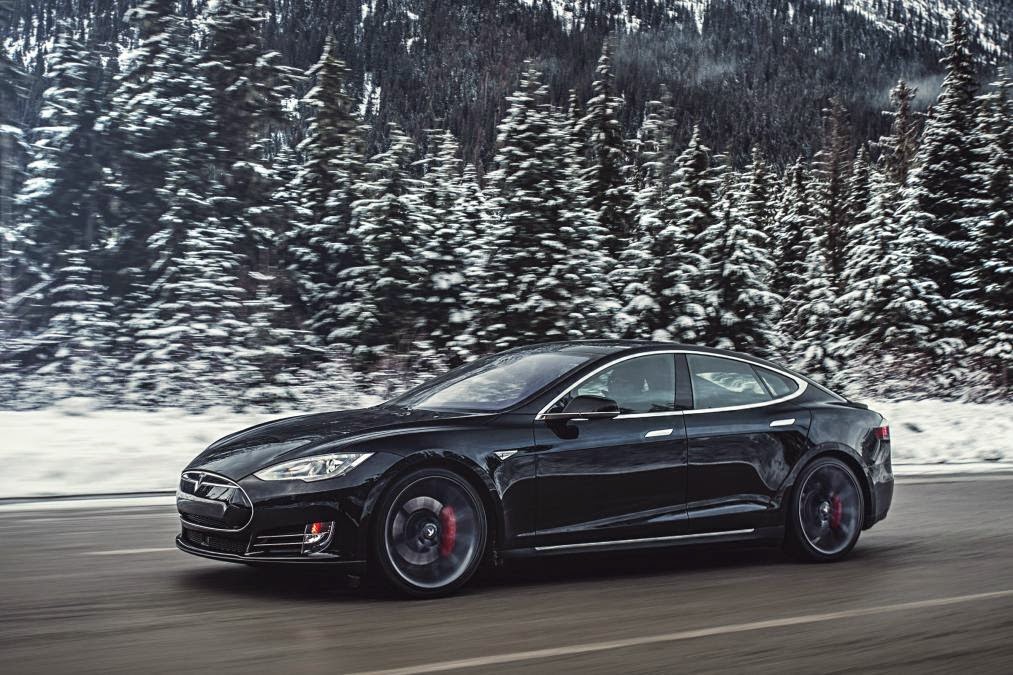
The Tesla P85D is an all-electric car and that means it has one big flaw: the UK’s electric car charging network is still under-developed. But with four-wheel drive and 682bhp in ‘Insane mode’, the P85D is such an incredible feat of technology it’s impossible not to be amazed by it. The flagship Model S offers immense power, Mercedes-like levels of luxury, lots of space and the promise of more Tesla-dedicated ‘Supercharger’ charging points in the near future. The Tesla P85D really pushes the boundaries of electric car motoring and is arguably the first fully-electric car a petrolhead can get excited about without feeling guilty.

Tesla may be a small car company compared to the likes of Ford, Volkswagen or Toyota but it has big ideas. And one of those ideas of founder Elon Musk’s is to prove that electric cars can have supercar-rivaling performance and still deliver all the benefits of zero emissions motoring.

This is the latest product from that vision; the Tesla Model S P85D – an electric car that has 682bhp and can rocket to 60mph in 3.2 seconds. Supercar fans will notice the P85D is as quick to 60mph as a McLaren F1, a car which Musk stated was used as the benchmark when it came to fast acceleration times. And yet, the P85D has a theoretical range of 300 miles, seats five (or even seven if the two boot seats are specified) and has Mercedes-levels of luxury.

The secret to the P85D’s immense power lies with its dual motor technology. A 464bhp electric motor on the back axle powers the rear wheels while up front Tesla has added a smaller motor with 218bhp on the front axle to drive the front wheels.


It makes the P85D four-wheel drive and capable of traveling on all road conditions including snow and ice – just like an Audi RS6. Tesla’s system can adjust the torque between all four wheels 100 times per second thanks to its electric powertrain, giving superb levels of grip.

Hop in, pull down the Mercedes-derived column gear change selector to ‘D’ and you’re good to go – there’s no need to start the car as carrying the key fob in your pocket both opens the doors and switches the ignition on. Touch the throttle and you’re thrown back in your seat with the only noise being a high-pitched whistle from the electric motors.

Once you’ve had enough of that, it’s time to experience the neck-snapping acceleration. A few prods on the tablet screen in the centre of the dash and the driver can change the ride height, control how severe the brake regeneration is and tweak a multitude of other functions. It’s also here where you can switch the P85D’s acceleration from ‘Sport’ to ‘Insane’ mode.

Do that and you’re not only flung back into your seat but your neck snaps into the headrest as you ride on the twin electric motors’ full power. As you race to 60mph your body is put through 1g – such is the severity of the dual motors unleashing their arsenal.

The sensation is made all the more ‘insane’ by there being no engine noise to accompany it. While a Nissan GT-R can get to 60mph a few tenths quicker, that car’s wailing V6 and rapid-fire gearchanges make it very clear what’s happening. With the Tesla, though, there’s just an eerily quite cabin and uninterrupted acceleration courtesy of the single-speed gearbox.


Straight-line speed isn’t the Tesla’s only forte, though. Thanks to that four-wheel drive system that’s continually shuffling the power to whichever wheel that needs traction the most, the P85D handles well too. The car’s natural style is to stay flat through corners; carry too much speed into a bend and the front washes wide but it’s only natural for a car that weighs more than 2.2 tonnes. The steering is weighty – it can be made unnecessarily heavy in ‘Sport’ mode – and while it misses out on being the last word in precision, the P85D is a credible sports saloon.

Once you’ve stopped behaving like you’re insane, the P85D switches from supercar-baiting into a luxury car. Inside the P85D stands out from the crowd thanks to some neat design touches like the swooping aluminum door handles and, of course, the 17-inch touch screen. That screen acts very much as the ‘heart’ of the car as it controls all functions with impressive ease.

Standard equipment includes 19-inch wheels, red brake calipers and alcantara headlining, but there are a whole host of optional packs and extra equipment that can be added. A premium pack which adds ambient lighting and leather is priced at £2,900, while two rear-facing seats in the boot (turning the P85D into a seven-seater) come in at £2,100.

The most interesting option is the Tech package for £3,500. It comes with Tesla’s Autopilot system that uses a forward-looking camera, radar and 360-degree ultrasonic sensors to monitor the road. Lane-changing technology that lets you tap the indicator stalk to make the car automatically move lanes and automatic parking that lets the Tesla will park itself will both appear soon via automatic software updates to the car.

Tesla claims a range of 300 miles between fill-ups with overnight charging recommended. The company is rolling out more of its ‘Supercharger’ battery-replenishing stations across the UK that top up the batteries by more than 50 per cent in around 20 minutes. Tesla can also sell you a second onboard charger doubling the rate of charge for £1,250.

The P85D sits at the top of the Model S range and is priced at £79,080 after the £5,000 government grant. That’s nearly £14,000 more than the Tesla 85D dual-motor that still has 371bhp and gets to 60mph in 5.2 seconds, so potential buyers would have to value the extra grunt to justify the considerable price premium. That said, for those who want to brag they have the fastest-accelerating electric car in the world and have faith in the UK’s still-young charging infrastructure, the Tesla Model S P85D will be the very best car money can buy. 
 
Key specs
  • Price: £79,080 (after £5,000 government grant)
  • Engine: Dual electric motor
  • Power: 682bhp
  • Transmission: Single-speed auto, four-wheel drive
  • 0-62mph/top speed: 3.2s/155mph
  • Range: 300 miles (est)
  • On sale: Now


Rabu, 25 Maret 2015

Posted by Unknown | File under :

The all-new Mercedes C-Class is here to take on the BMW 3 Series, Jaguar XE and Audi A4 in the competitive compact executive sector. Prices start just under £27,000, making the C-Class slightly more expensive than the previous model, and slightly more pricey than the competition. 

However, Mercedes has added lots more equipment to lure in new buyers, so spec-for-spec, the new model is actually better value than before. This is especially true when you consider that Mercedes claims improvements to the engines mean it’s also up to 20 per cent more fuel-efficient. 

Taking its visual and technological cues from Mercedes’ flagship S-Class, the new C-Class promises refinement and luxury unrivalled in this fiercely fought class. It’s available as a saloon, and there's a C-Class Estate, too. 

There’s a choice of C220 and C250 BlueTEC diesels, plus a C200 petrol. At the top of the range is the exciting new AMG C 63, while in 2016 the AMG engineered, four-wheel drive C 450 joins the line-up.


Looks count for a lot in the executive car park and the new Mercedes hits the spot. Taking its inspiration from the brand’s flagship S-Class limousine, the C-Class’ neatly styled lines, sculpted sides and swept-back headlamps provide plenty of head-turning kerb appeal. Sport trim cars get 17-inch wheels, chrome treatment and LED lights.

The flagship C 63 is marked out by its deeper front bumper, subtly flared front wheelarches, quad exhaust layout and a bonnet that features a pair of ‘power’ bulges. The standard C 63 gets 18-inch alloys, while the C 63 S has larger 19-inch rims.

The upmarket feel continues inside where the luxurious cabin sets new standards in the class. Again it’s influenced by the S-Class, so you get high-quality materials and a beautifully designed dash with eyeball air vents and ebony trim inserts.

The tactile metal finish of the air-con controls, power seat adjusters and the rotary COMAND system controller are further highlights, while the leather multifunction wheel is lovely to hold.
Standard kit is generous, too. All versions get a DAB radio, Bluetooth and Mercedes’ trademark Artico man-made leather, while Sport and AMG cars add desirable extras such as heated seats, sat-nav and LED headlamps. The C 63 is given a low key makeover with bespoke AMG instruments, a pair of high-backed sports seats and a flat-bottomed steering wheel.

There's a £2,795 Premium Plus package if you want some extra kit, including keyless-go, ambient cabin lighting, a powerful Burmester stereo, panoramic glass roof and a COMAND sat-nav controller that features a glossy 8.4-inch tablet-style screen in place of the standard seven-inch display.
Also included is the S-Class’ £350 Air Balance Pack, which adds a fragrance dispenser to the climate control.

However, even without these high-end additions, the modern cabin feels and looks really upmarket, while standard kit includes heated front seats, DAB radio, aluminium door trims and cruise control. 

 
The new C-Class is the first car to be built using Mercedes’ new rear-wheel drive architecture (MRA). This uses around 50 per cent aluminium in its construction – up from 10 per cent before – and cuts 70kg from the body. Other weight savings mean the new C-Class weighs around 100kg less than previously, which all helps improve the driving experience.

The big selling engine is expected to be the 2.1-litre diesel in the C220 and C250 BluTEC, which provides plenty of power and competitive claimed fuel economy figures. However, it’s carried over from the previous car and remains pretty gruff and noisy. 

The C-Class’ upmarket atmosphere is spoiled when you twist the key and Mercedes’ ageing diesel rattles into life. The 2.1-litre engine fails to settle down on the move, either – it sounds strained when extended and drones on the motorway.

The optional £1,500 seven-speed auto gearbox is unresponsive to throttle inputs and often holds gears too long before shifting up. And while there are steering wheel paddles, there’s no option to lock the box in manual mode, so it frequently kicks down with no warning.


The £895 AirMATIC agility Pack adds air-suspension, adaptive dampers and an Agility Select function that allows you to choose from Eco, Comfort, Sport and Sport+ driving modes. On smooth roads this C-Class floats over bumps, yet potholes, broken tarmac and motorway expansion joints send a crash through the cabin.

The steering is quick and direct, but it’s inconsistently weighted and gives very little feedback. Selecting Sport+ mode sharpens the throttle, adds weight to the steering and stiffens the dampers, but the Mercedes’ front tyres start to understeer more easily than we'd like. Plus, the firm suspension causes the car to skitter uncomfortably over mid-corner bumps.

However, it’s not all bad news for keen drivers, because Mercedes’ tuning arm AMG has come to the rescue. First up is the new C 63, which is powered by a mighty twin-turbo 4.0-litre V8 and is available in ‘standard’ 469bhp trim and wild 503bhp S guise. The later will sprint from 0-62mph in just 4.0 seconds and can be specified with raised speed limit of 180mph (both cars are electronically limited to 155mph). The new engine sounds incredible, too, emitting a NASCAR style bellow at high revs.

More importantly, AMG has worked hard on the suspension and steering, so the C 63 delivers the sort of grip, composure and engagement that drivers of the standard C-Class can only dream of.
The C 450 AMG arrives in summer 2016 and uses many of the C 63’s suspension and steering components to deliver a more involving driving experience. More importantly, the sharper handling is mated to Mercedes’ 4MATIC all-wheel drive transmission, which helps deliver terrific all-weather security. Under the bonnet is a turbocharged 3.0-litre V6 petrol that catapults the C 450 from 0-62mph in 5.0 seconds and delivers a pleasingly rorty growl from its twin exhausts.
All the AMG models are fitted with reasonably slick seven-speed auto and are available in four-door saloon and practical estate bodystyles. 

Many of the new C-Class’ components are well proven – it has an established engine and gearbox. Plus, Mercedes impressed with a ninth place ranking in our Driver Power 2014 satisfaction survey, with owners praising its cars’ reliability and build quality. The dealers finished in a less impressive 21st position, but that’s still five places ahead of Audi. 

As you’d expect from a new Mercedes, the C-Class is loaded with standard safety kit, including seven airbags, a driver tiredness monitor and tyre-pressure warning. It’s been given a five-star Euro NCAP crash test rating.

Plus, you can add hi-tech options like the £2,300 Driver Assistance Pack, which brings blind-spot warning, lane departure assist and adaptive cruise control. Other highlights fitted to our car include an £825 head-up display and £545 Active LED lights with cornering function and high-beam assist. 

At 4,686mm long and 1,810mm wide, the new C-Class is 95mm longer and 40mm wider than before. Couple this to an 80mm increase in wheelbase, which now measures 2,840mm, and the C-Class certainly has the potential to offer more cabin space.

And that’s true in part. Up front, there’s lots of room in the comfortable seats, with plenty head and legroom. The driving position is better aligned now, too, and visibility is good.

There’s plenty of space in the doors and dash to store the usual on-board clutter, with all models including a media interface for connecting your smartphone to the car.

It doesn’t take long with a tape measure to realise that Mercedes used the BMW 3 Series and Audi A4 as benchmarks when designing the C-Class. All three cars provide similar amounts of head and legroom for rear-seat passengers, plus they have identical 480-litre boot capacities.


The C-Class gets a split-folding rear bench in SE models and above, but unlike the 3 Series, there’s no under-floor space.

There’s lots of useful storage space elsewhere, including a large glovebox, door bins and a lidded cubby between the front seats. The rear armrest also incorporates two cup-holders. 

From launch, there were two diesel and one petrol engine options to choose from. The C220 Bluetec 168bhp 2.1-litre diesel is expected to be the best seller. In entry-level manual SE form, it emits 103g/km and returns over 70mpg, meaning it sits in the 16 per cent BiK bracket – great for company car drivers.

The C250 Bluetec model is much cleaner than before, and claims the same CO2 figure, but 65mpg. The only petrol model is the C200, powered by a 181bhp 2.0-litre engine that returns 53.3mpg and emits 123g/km of CO2, whether you choose manual or auto gearboxes. All engine and gearbox combinations are more competitive in terms of running costs than before, with some up to 20 per cent more efficient.

The engine range will soon expand to include the C200 Bluetec, which is powered by a new 1.6-litre diesel that comes in 114bhp or 135bhp versions. A C300 Bluetec diesel-electric hybrid will also be offered, which develops 230bhp yet returns 72.4mpg. A plug-in petrol-electric hybrid will also be offered.

Private buyers will enjoy strong 45.2 per cent residuals, while options are bundled in decent-value packs, such as the £995 Executive Pack that adds sat-nav, heated seats and a split-folding rear bench to SE models. There’s also the £1,595 Premium and £2,795 Premium Plus packs.

Selasa, 24 Maret 2015

Posted by Unknown | File under :

The Audi A1 S line looks great, has a classy, high quality interior and strong residuals. It's not the cheapest supermini to buy, thanks to the Audi badge on the front, plus direct rivals like the MINI offer a more exciting driving experience.

The Audi A1 S line certainly has the desirable image and top-notch interior you'd expect of a small Audi. In fact, these criteria may go some way to justifying the rather hefty premium over the humble Volkswagen Polo, on which it shares a platform and large number of parts.

Engine-wise, the A1 S line comes in two petrol 1.4-litre TFSI units, with 123bhp and 148bhp respectively. The higher-powered unit features Audi's Cylinder on Demand technology, which shuts down cylinders when they're not needed.

On the diesel front, the only option is the punchy 1.6 TDI with 114bhp It'll do 0-62mph in 9.4 seconds, yet return more than 76mpg.  


The A1 S Line models have a firmer suspension setup, but the trade off for a sportier drive is a compromised and generally uncomfortable ride. Unless you live somewhere with exceptionally smooth roads, we'd stick to the softer-riding SE models – or select the standard suspension, which customers can opt for on new cars free of charge. 

Thanks to shared mechanicals with the VW Polo, it's no surprise that the A1 driving experience errs on the side of sensible rather than exciting. S line models get lowered and stiffened suspension but the steering is precise and well weighted. And there’s a decent amount of grip – but it can’t match the engaging MINI or DS3 for driving fun. Visibility is good and it's pretty easy to park, so it ticks the urban runabout boxes well.

The A1 S line is available in both three-door and five-door Sportback body styles and is a mature looking alternative to the retro MINI and distinctive Citroen DS3. So if you're looking to keep a low profile, it's certainly worth consideration.


Taking styling cues from the larger A3 and A4 models with the familiar corporate grille and swept-back headlamps, the A1 S line can also be specified with a range of alloy wheels, front fog lights and chrome exhaust pipe. And you can opt for contrasting roof paintwork which helps give the A1 S line a much-needed visual lift.

While the A1 S line exterior lacks drama, its classy cabin is without doubt one of the best in the business. It’s slickly designed, perfectly executed and packed with high-grade materials.

Neat details include a knurled metal finish for the heating and stereo controls, a beautifully damped pop-up screen for the infotainment system and crisply designed dials. There’s also plenty of seat and wheel adjustment, so getting comfortable isn’t a problem.
Posted by Unknown | File under :

The appeal of entry-level BMW ownership has been widened with the arrival of the facelifted 1 Series. It’s easier on the eye, thus keeping style-conscious buyers happy, while new fuel-sipping diesels will ensure company car buyers won’t be tempted by rivals from Audi or Mercedes. Passenger space remains an issue, but compact premium packages don’t come much better than this.

Premium cars drip with success quite like the 1 Series, which has sold more than two million examples worldwide in only 10 years on the market. It’s long been a cornerstone of BMW’s market dominance, and to ensure the hatchback remains fresh and on top of its game, it’s been given a mid-life refresh to keep the Audi A3 and Mercedes A-Class honest. 
One thing that’s always divided opinion is the way the 1 Series looks. How a manufacturer can conjure up the technical prowess to create something as radical as the i8 and then build something as frumpy as the 1 Series has long been debated, but this facelifted model has attempted to address that.

From the front BMW has worked on sculpting a more crowd-pleasing face for the hatch, which from certain angles now has the look of a miniature 3 Series. A sharper front bumper, tauter lines and crisper LED headlamps inject a greater sense of quality and attention to detail.


So far so good, but move round the back and BMW has began to undo its own fine work. Whereas previously the front end provided the ammunition for criticism, it’s now the rear that’ll raise a few questions. Again there is a reshaped bumper, but the i8-inspired tail-lights look too big and are bulky enough to upset the car’s proportions. 

Yet the more time you spend in the 1 Series’ company, the less offensive it becomes. As before, it’s available as a three or five-door, with the more practical offering currently outselling its counterpart by nearly three to one. There are also five new diesels – most interesting of which is the 115bhp 1.5-litre three-cylinder 116d – as well as four petrol engines. 

We got our hands on the predicted top seller first – the 187bhp 120d – equipped with the optional but costly eight-speed automatic gearbox and xDrive all-wheel-drive system. Go for the standard six-speed manual and rear-wheel-drive set-up, and you’ll save more than £3,000. 


There are no dramatic changes from the pre-facelift model behind the wheel, so the 1 Series still drives with the same composure and finesse as before. Tweaks to the engine’s internals have sharpened throttle response slightly, with 400Nm of torque ushering the 120d from 0-62mph in a brisk 6.8 seconds.

The 2.0-litre engine is about as muted as a diesel can get, helped by longer gearing in the auto which also means at 70mph you’re barely tickling 2,000rpm. Despite its hot hatch performance figures, the 120d xDrive also claims 62.8mpg and 119g/km. Fleet buyers, however, will be more interested in the 118d, which now creeps below the magic 100g/km emissions mark.

On the move there’s masses of traction from the xDrive system, and the perfect 50:50 front-to-rear weight distribution helps keep everything controlled at speed. Optional adaptive dampers serve up Eco, Comfort and Sport driving modes, but we found Comfort to offer the best compromise in terms of body control and acceleration – meaning that’s an option box best left unticked. You don’t need to extend the engine beyond 3,500rpm, as you can use the vast reserves of torque to shepherd you along at pace.


What the facelift doesn’t bring to the 1 Series, however, is any major updates inside. In comparison to an A3 Sportback, the BMW lacks a certain sparkle. Everything is solid and well put together, but it’s just a little too bland up front.

Another drawback is rear space. Narrow door openings restrict access, and while headroom is generous there’s only just enough legroom for adults. The elevated middle seat means sitting three abreast is a no go, too – unlike in the likes of the A3.

Key specs
  • Model: BMW 120d xDrive
  • Price: £28,355
  • Engine: 2.0-litre 4cyl turbodiesel, 187bhp
  • Transmission: Eight-speed auto, all-wheel drive
  • 0-62mph/top speed: 6.8 secs/138mph
  • Economy/CO2: 62.8mpg/119g/km
Posted by Unknown | File under :

Slightly more polished after a mild update, the 6 Series is a truly impressive coupé. This 650i is a blisteringly quick, effortless cruiser, but the 4.4-litre V8 doesn’t best fit where the car is designed to thrive. We love its noise and potency, but common-sense points you in the direction of the more flexible 640d Coupé instead.

There aren’t many other models in BMW’s product portfolio you can spend over £75,000 on and come away without the full-fat M division treatment, but the revised 650i Coupe is one of them. 
Beneath the minimal refresh – note only nine bars in each kidney grille rather than 10, the reshaped front bumper and LED headlamps – sits the same basic 4.4-litre twin-turbo V8 and sonorous exhaust note from the M6 Coupe. 
 
Provoke it and you’re in for some serious supercar-baiting performance. It may be over 100bhp down on the M6 with 444bhp, but the torque figure is almost identical so pushing the throttle from low revs will see the nose rise and the horizon dragged towards you at alarming pace. 


Where the 6 Series' bulk is apparent is in corners. It manages fast bends well enough and keeps surprisingly flat, but it feels ungainly threading it through turns which demand quicker changes in direction. The steering has a solid weight to it, yet it doesn’t relay much information back to the driver. 

Where the 650i really excels is as a cruiser. Flick the fantastic eight-speed automatic gearbox into auto, set the adjustable dampers to comfort and you can waft along peacefully and at pace. The ride doesn’t have the pillowy softness to it that you’d expect from a big GT car, fidgeting slightly over expansion joints and jagged tarmac, but it’s still very compliant. 

Yet, this is where the argument for the 650i begins to fall apart. If you plan to use the 6 Series where it feels at home, the cheaper, more efficient and equally brisk 640d does an impressive job. It has a really exploitable slug of low-down torque and will return over 54mpg, where the 650i claims only 32.9mpg – on test we only got 17mpg.


Whatever engine you opt for, you get a lavishly trimmed cabin. Our range-topping M Sport model was kitted out with a sports steering wheel, digital dials, high gloss plastics and lashings of leather on the curvaceous dash and centre console.
 
Glance over your shoulder and you’ll also notice a pair of rear seats. However, they’re nothing more than a token gesture and only really suitable for small children, as headroom is severely restricted due to the coupe body.


Key specs
  • Price: £76,150
  • Engine: 4.4-litre V8 twin-turbo, 444bhp
  • Transmission: Eight-speed auto, rear-wheel drive
  • 0-62mph/top speed: 4.6 secs/155mph 
  • Economy/CO2: 32.9mpg/206g/km

Senin, 23 Maret 2015

Posted by Unknown | File under :

The improvements have been applied to the practical Tourer estate, too.


That means new headlights with LED daytime running lights, refreshed bumper designs and an updated grille. Honda has also done some work on the Tourer’s interior, with the same updated Android infotainment system from the hatch, as well as new door trims, seat fabrics and dashboard panels.

Luckily the engineers have done nothing to alter this car’s practicality. The 624-litre boot keeps it at the top of its class, surpassed only by the Peugeot 308 SW, which pips it with a vast 660-litre load bay. Space in the back of the Civic is good, too, and the seats fold fantastically in one smooth action.


Our range-topping EX Plus is actually £1,320 less like-for-like than the previous generation car, making it better value than before. Standard kit is good – as you’d expect at this price – including 17-inch alloy wheels, heated leather seats and automatic climate control. All models get the new Honda Connect central screen too, with our EX Plus also boasting built-in sat-nav with European mapping.

For £600, Civic Tourer buyers can also spec a Driver Assistance Package, adding safety tech such as forward collision warning, lane departure warning, blind spot monitoring, traffic sign recognition and automatic high beam support. While that seems reasonable value, few new car buyers will be prepared to stump up more of their hard-earned cash for extra safety tech, especially when you consider metallic paint will set you back £525.


It's available with 1.8-litre i-VTEC petrol and 1.6-litre i-DTEC diesel engines, and despite the extra bulk, it doesn’t feel hugely different to the hatch - with a well sorted chassis, nicely weighted steering and decent motorway refinement. It suffers the same delayed lug of torque, meaning progress at low revs is limited, but as the revs build the engine feels much more useable.

The frugal diesel engine means it's among the cheapest cars in its class to drive, too. Honda says it’ll do 72.4mpg in mixed motoring, though in our experience you’ll need a very light right foot to achieve figures like that. We managed 54.1mpg over six months during our time with the pre-facelift car, last year.

While the updates haven’t changed the way the car drives, the improved kit list and tweaked styling make it an even more attractive ownership proposition. Most buyers will be happy with the lesser SE Plus or SR trim models, but if you want all the bells and whistles, this top-spec EX should fit the bill nicely. 

 
Key specs

  • Price: £26,140
  • Engine: 1.6-litre 4-cyl turbodiesel
  • Power/torque: 118bhp/300Nm
  • Transmission: Six-speed manual, front-wheel drive
  • 0-62mph: 10.5 seconds
  • Top speed: 121mph
  • Economy/CO2: 72.4mpg/103g/km
  • On sale: Now